
Pilea
The Chinese money plant and its cousins: round or ridged leaves, fast growth and offsets to give away. Our Pilea, safe for pets.
- 40 DH delivery, whatever the city
- Cash on delivery
- Damaged plant: replaced
- Studio in Rabat · Tue–Sat 10:00–18:00
New
The Instant T range
Four steps to healthy plants
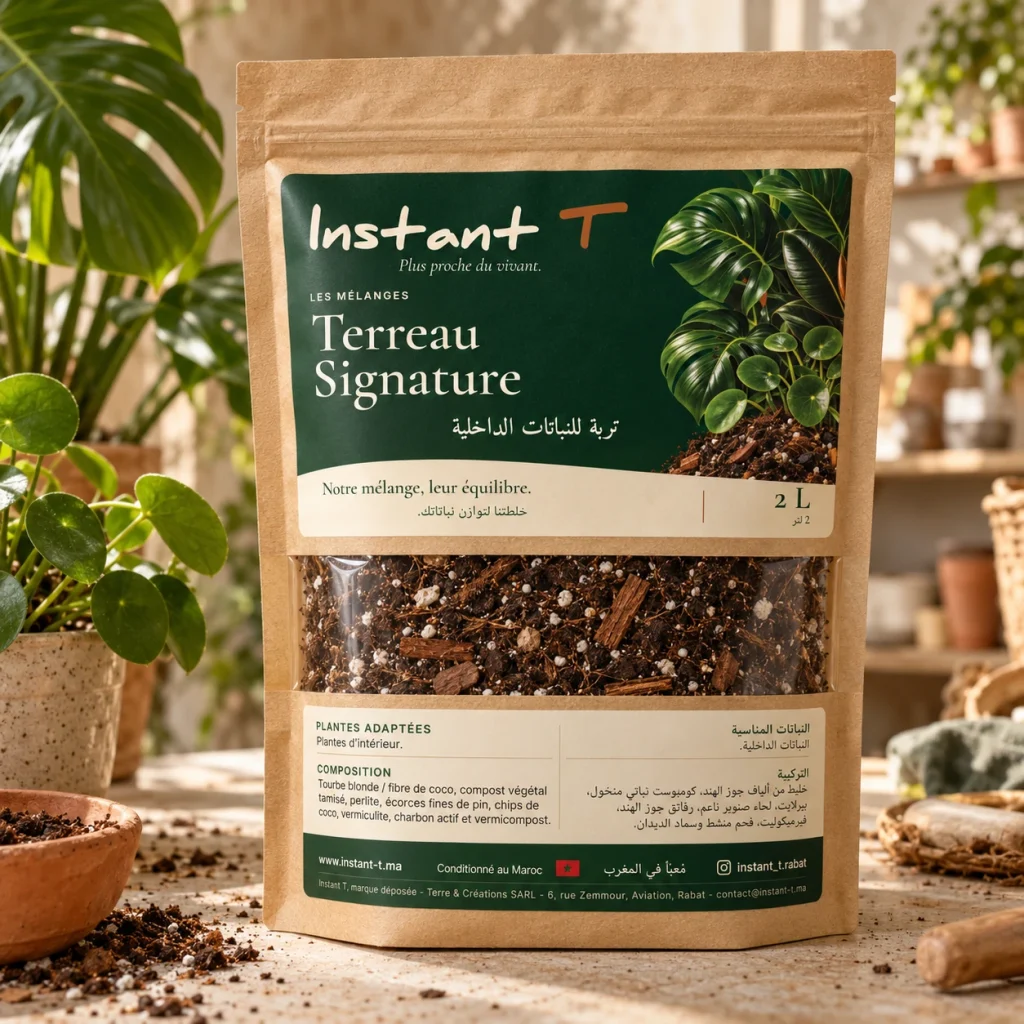 Step 1 · SoilSignature Potting MixA potting mix for repotting, with compost and biochar instead of peat.2 L · 5 L · د.م. 39,00 – د.م. 59,00Price range: د.م. 39,00 through د.م. 59,00→
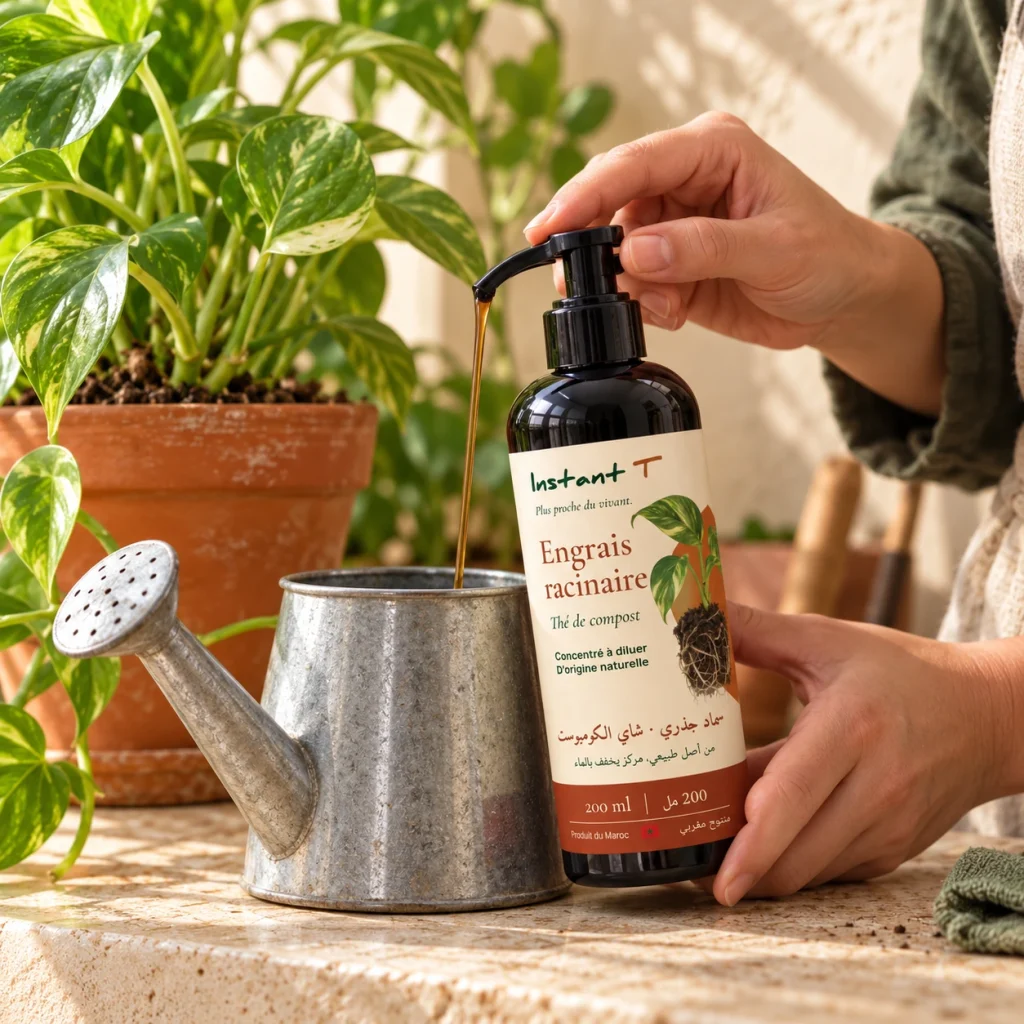 Step 2 · NutritionRoot feed — compost teaA concentrated compost tea to feed the roots and the life in the soil: one bottle makes 20 litres of watering.200 ml · د.م. 99,00→
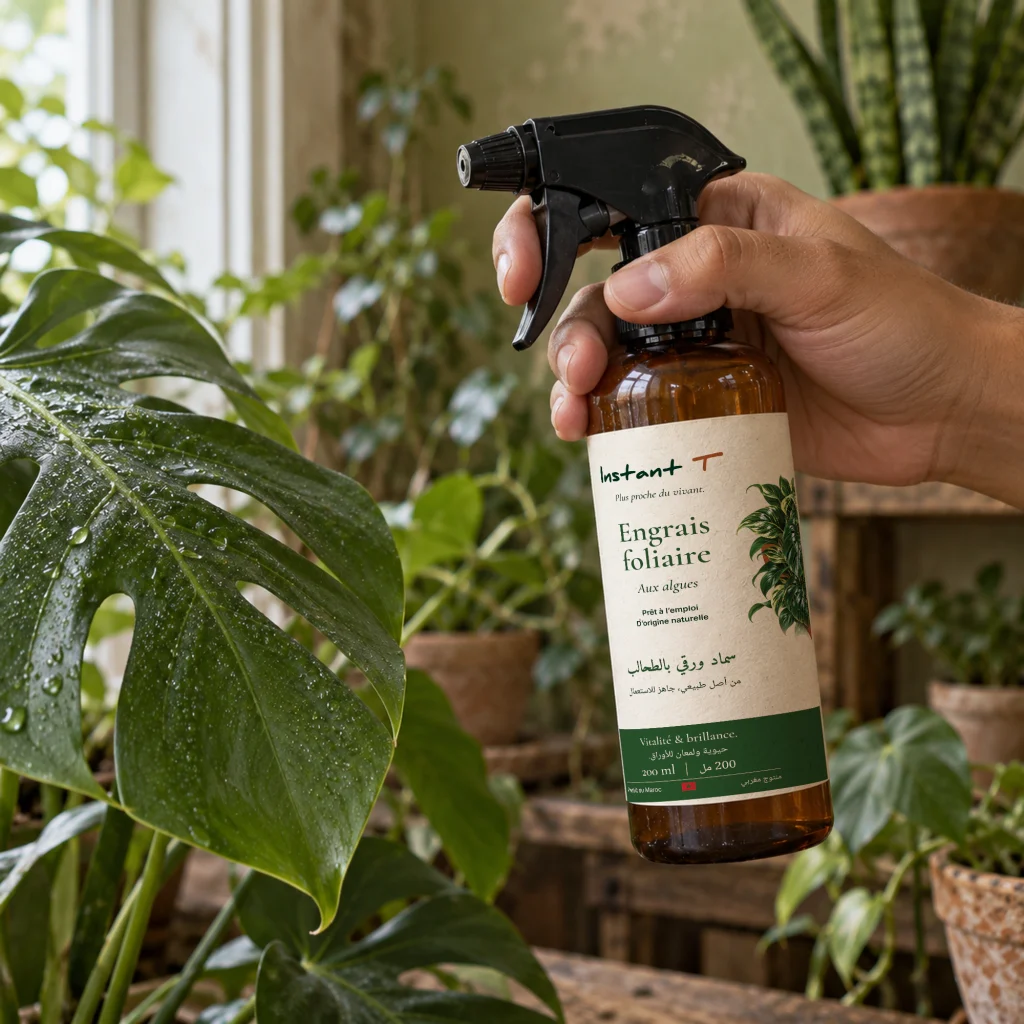 Step 3 · FoliageFoliar feed — seaweedA seaweed extract to support the foliage, sprayed on.200 ml · د.م. 89,00→
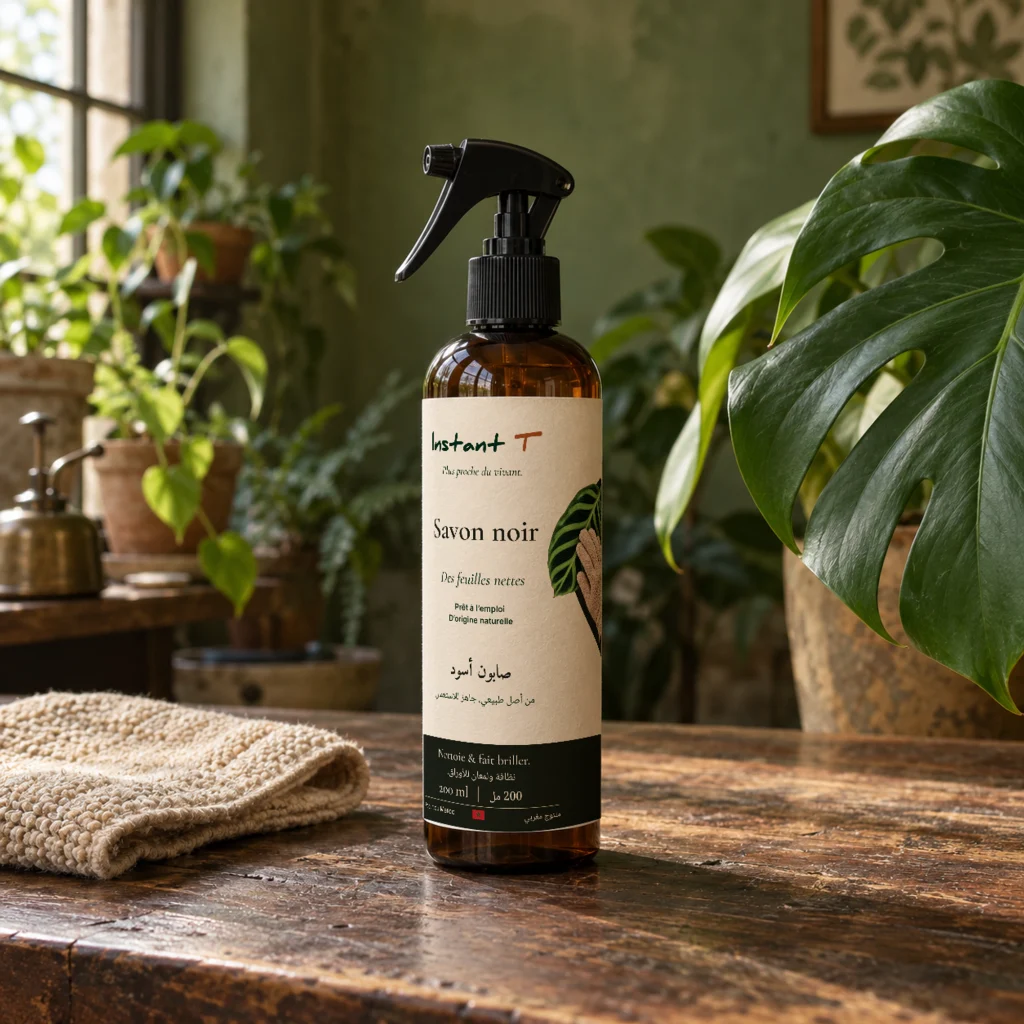 Step 4 · ProtectionBlack soap for plantsA ready-to-use black soap that cleans the foliage and helps protect it against pests and diseases.200 ml · د.م. 45,00→
Where to start?
I'm a beginner
Plants that forgive
21 products
Low light
For dark rooms
12 products
My pets
Safe for cats and dogs
7 products
Gifts
Plants, arrangements, creations
23 products
Care & potting mixes
Potting mixes, plant food, tools
18 products
Not sure? Find your plant in 5 questions or ask for advice on WhatsApp.

Pilea, the friendship plant
The genus Pilea belongs to the nettle family (Urticaceae), but don't worry: it doesn't sting. It has several hundred species from tropical and subtropical regions. The star is Pilea peperomioides, native to the mountains of Yunnan, China, brought to Europe by a Norwegian missionary in the 1940s and then passed from hand to hand through its offsets. Hence its nickname, the friendship plant. It's easy, grows fast in good light and is safe for pets.
Growing passport
Ease of care
Light needs
Water needs
Air humidity
Temperature13 to 27 °C
Cats, dogsSafe for pets
Species and varieties
| Species or variety | What sets it apart |
|---|---|
| Pilea peperomioides | The Chinese money plant: perfectly round leaves on thin stalks. |
| Pilea cadierei | The ‘aluminium plant’: green leaves marked with silver. |
| Pilea involucrata ‘Moon Valley’ | Ridged green and bronze leaves, highly textured. |
| Pilea glauca | Tiny silvery blue leaves on trailing red stems. |
Caring for them in Morocco
- Light: bright, near a window, without scorching sun. Turn the pot every week: it leans towards the light.
- Watering: when the top two centimetres of soil are dry.
- Offsets: once they have a few leaves, detach them with a little root and pot them up: plants to give away.
- Potting mix and food: a light potting mix lightened with perlite, and compost tea root feed once a month in spring and summer.
Reading the symptoms
- Leaves doming: too much light or heat.
- Lower leaves dropping: normal with age, or overwatering if many fall.
- Leaning plant: turn the pot every week.
A plant you're worried about? Send a photo to the Plant Doctor.
Sources: Plants of the World Online (Royal Botanic Gardens, Kew) for names and origin; Royal Horticultural Society for cultivation; ASPCA for toxicity; and our own practice at the Rabat studio. Growing guidelines are averages: the light and air in your home matter more than anything.
Delivery anywhere in Morocco for 40 DH, cash on delivery, or collection from the studio, 6 Rue Zemmour, Aviation district, Rabat.
Frequently asked questions
Is Pilea toxic to cats?
No, Pilea peperomioides is considered safe for cats and dogs.
How do I separate an offset?
Clear the soil at the base of the offset, cut the root connecting it to the mother plant with a clean knife, then pot it up in a small pot. Water lightly and keep it in soft light for a week.