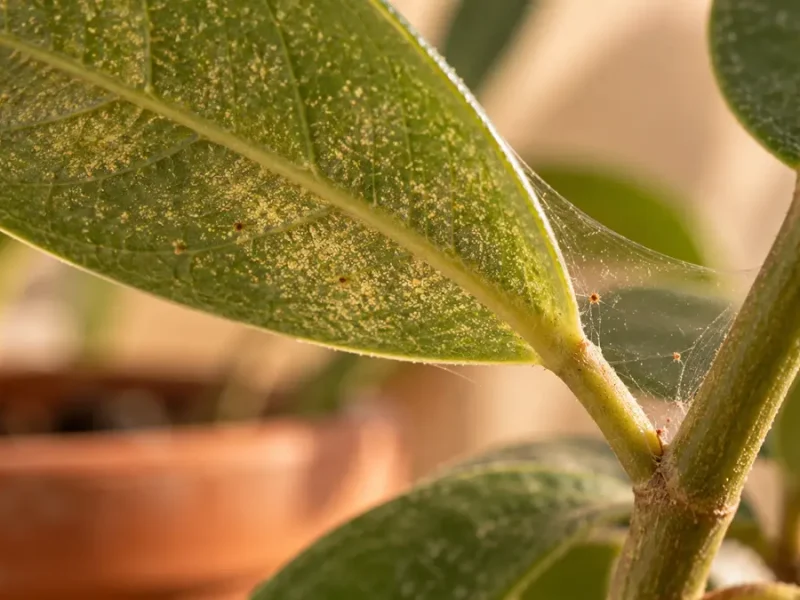
The spider mite isn’t a spider but a tiny mite, barely visible to the naked eye, often reddish-orange, sometimes yellow or greenish. It pierces leaf cells to suck out their contents. It loves hot, dry air: summer in Rabat, the chergui wind and air conditioning give it ideal conditions.
Spotting them
- Dull leaves speckled with countless tiny yellow or white dots, which eventually turn yellow or brown.
- Very fine webbing, like silk, under the leaves and in the leaf joints, when the infestation is advanced.
- A simple test: wipe a white tissue under a leaf. Red or brown streaks: that’s them.
Alocasias, Calatheas, Marantas, Ficus and indoor palms are among their favourite targets.
Getting rid of them
- Isolate the plant.
- Shower the foliage thoroughly, especially the undersides of the leaves: water knocks off a large share of the mites and destroys their webs.
- Wipe each leaf, top and underside, with cleaning gloves or a damp cloth.
- Spray ready-to-use black soap, concentrating on the undersides of the leaves.
- Repeat every four to five days for three weeks: a new generation hatches in under a week when it’s hot.
Stopping them coming back
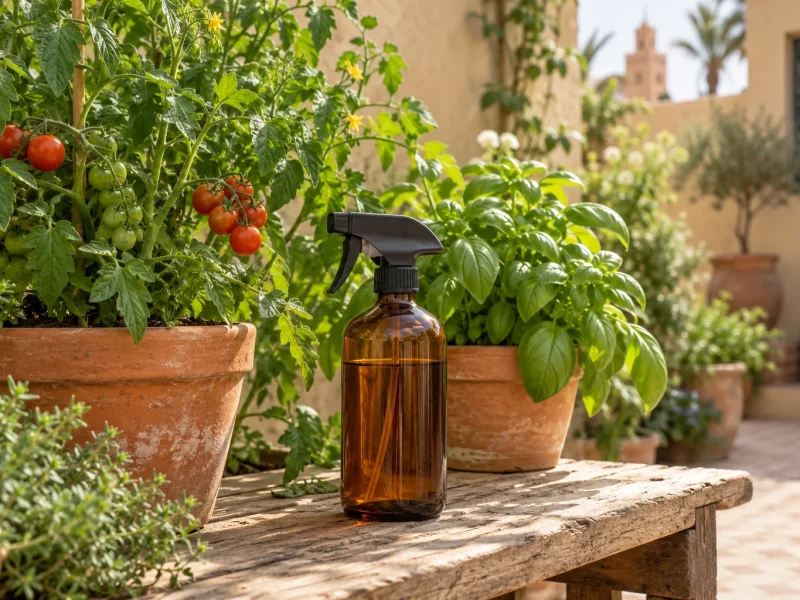
- Raise the humidity around sensitive plants: mist with a fine-mist spray bottle, group plants together, or stand pots on a tray of damp pebbles.
- Keep them away from air-conditioning vents and radiators.
- Check the undersides of the leaves every week in summer: they’re far easier to treat early on.
Need an opinion?
Send a photo of your plant to our Plant Doctor: the whole plant, a close-up of a leaf (top and underside) and the surface of the soil. The diagnosis is free, and you can also drop by the studio at 6 Rue Zemmour, Aviation district, Rabat, Tuesday to Saturday, 10am to 6pm.