In Morocco, black soap is first and foremost the soap of the hammam. But in the garden, it’s also one of the oldest and simplest ways to keep plants clean and keep away the small insects that weaken them. Provided you use it properly: the right soap, at the right time, on the right plants.
What black soap does to a plant
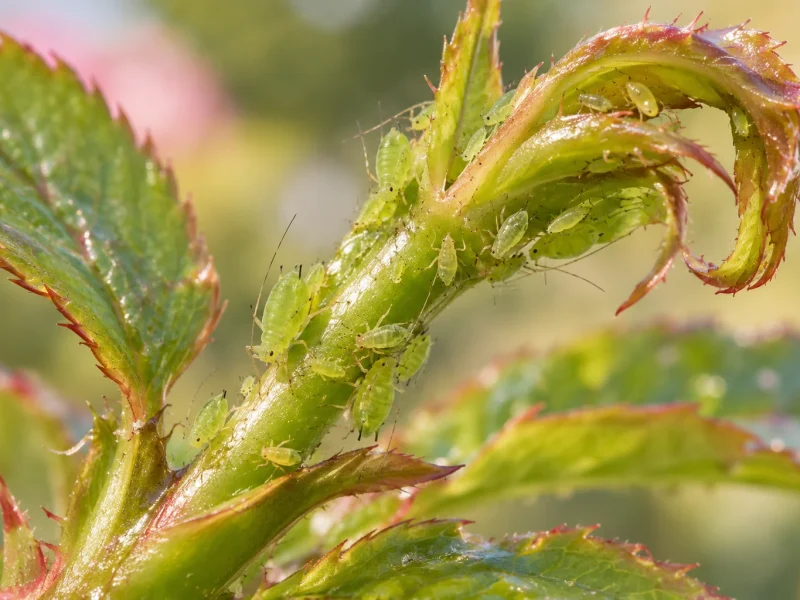
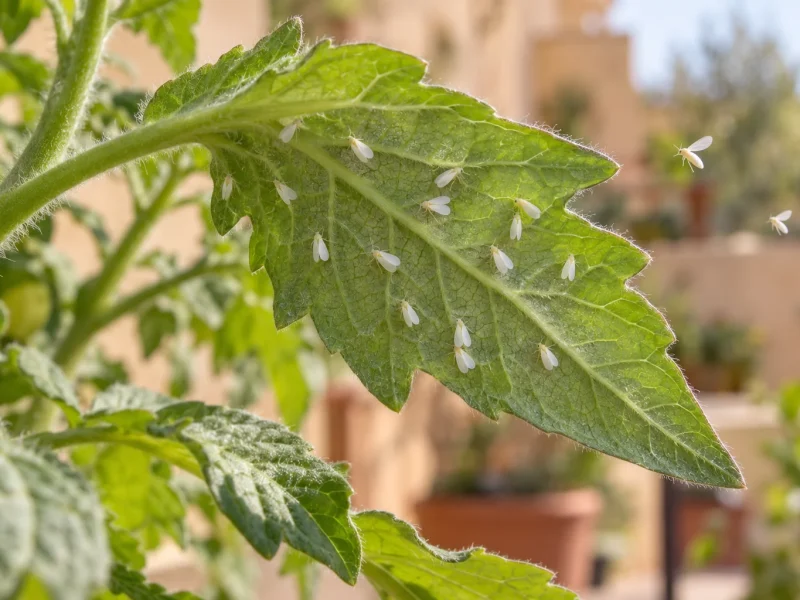
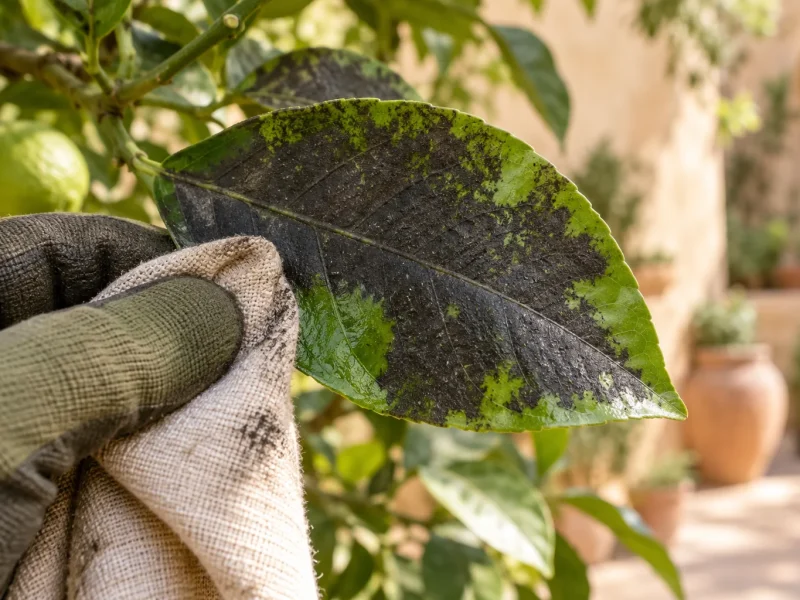
Black soap works in two ways. It cleans: it removes dust, deposits and the sticky honeydew left by insects, on which sooty mould grows — the black mould that dulls leaves. And it protects: used regularly, it makes foliage less welcoming to pests, and it works on contact against the soft-bodied insects it touches, such as aphids, young mealybugs, whitefly and spider mites.
It’s neither systemic nor persistent: it only works where it’s sprayed, and only while it’s wet. That’s what makes it a gentle treatment, but it’s also why you need to aim accurately and repeat.
Hammam soap or soap for plants?
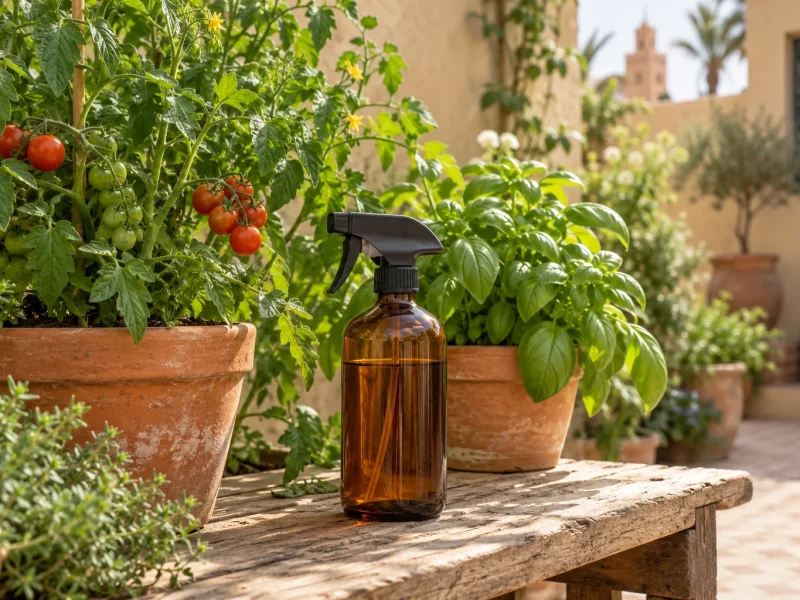
Hammam black soap is made for skin: thick, highly concentrated, often scented or enriched. Diluted by eye, it makes a solution that’s too strong or too weak, and its additives have no business on a leaf. A ready-to-use black soap prepared for plants avoids guesswork. Ours, black soap for plants, is used as it is in a 200 ml spray bottle: it suits potted plants, balconies, terraces and small vegetable gardens.
In the garden: which plants, which pests?
- Roses: aphids settle on young shoots and buds in spring. Spray as soon as the first colonies appear. See our article on aphids.
- Citrus in pots (lemon, orange, kumquat): mealybugs, whitefly and sooty mould are common. Clean sticky leaves and treat the undersides.
- Oleander and hibiscus: aphids on young stems, scale insects along the branches.
- Balcony vegetable gardens: aphids on broad beans and lettuces, whitefly on tomatoes and aubergines. Rinse vegetables before eating them.
- Herbs (basil, mint): tender foliage — always test on a few leaves first.
How to use it, step by step
- Shake the bottle.
- Spray late in the day, never in full sun: heated droplets burn the leaves. In the evening, you also spare bees and ladybirds, which are less active.
- Aim at the undersides of leaves, young shoots and leaf joints: that’s where insects hide. The soap has to touch them.
- For routine care, once a month, spray and then wipe with cleaning gloves or a soft cloth.
- If insects have settled in, leave it on without wiping and repeat every five to seven days for three to four weeks: eggs hatch in several waves.
Precautions
- Test on a few leaves of a plant you don’t know, and wait one to two days.
- Avoid hairy leaves (African violets, some sages) and plants covered in a powdery bloom.
- Don’t treat a thirsty plant: water it the day before.
- Don’t mix the soap with other products.
- Keep the bottle out of reach of children and pets.
Prevention rather than cure
A well-fed, well-placed plant is more resistant. In spring and summer, feed potted plants with our compost tea root feed and support the foliage with our seaweed foliar feed. The Plant Care Kit brings these three care products together. Above all, look at your plants closely once a week: a pest spotted early is dealt with in two sprays.
Frequently asked questions
Does black soap kill beneficial insects?
It acts on the insects it touches, beneficial ones included. That’s why it pays to target the colonies rather than drench the whole garden, and to treat in the evening.
Can I use it on an olive tree?
Yes, against scale insects and sooty mould, on young trees and olives in pots. On a large tree, ask us for advice.
Where can I buy it in Rabat?
Our black soap is available online, with delivery across Morocco, and at the studio.
Need an opinion?
Send a photo of your plant to our Plant Doctor: the whole plant, a close-up of a leaf (top and underside) and the surface of the soil. The diagnosis is free. You can also drop by the studio at 6 Rue Zemmour, Aviation district, Rabat.