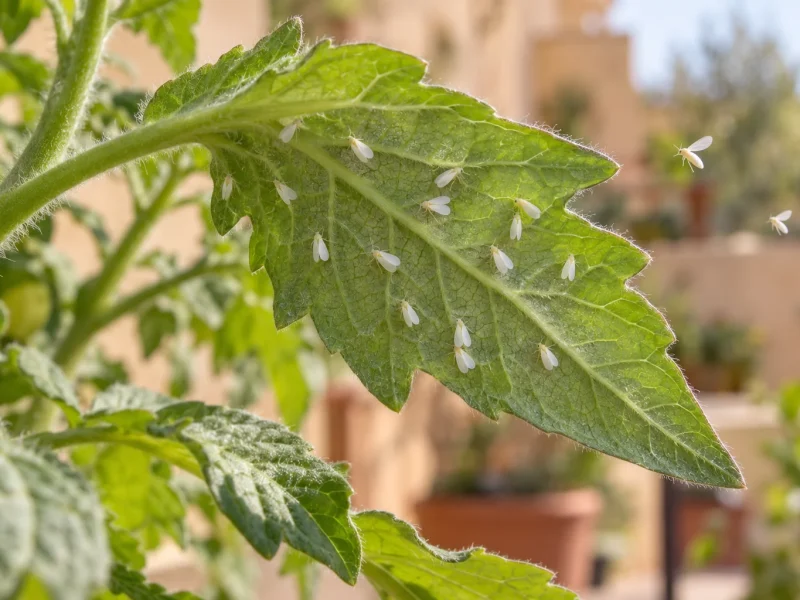
You touch the plant and a little white cloud flies up, before settling straight back under the leaves: this is whitefly. These insects, one to two millimetres long with white powdery wings, suck sap from under the leaves. They love heat, which makes them common in Morocco, in vegetable gardens as well as indoors.
Recognising them
- The adults: tiny white flies that take off when you move the plant.
- The larvae: small flat scales, translucent or greenish, motionless under the leaves. They’re often mistaken for spots.
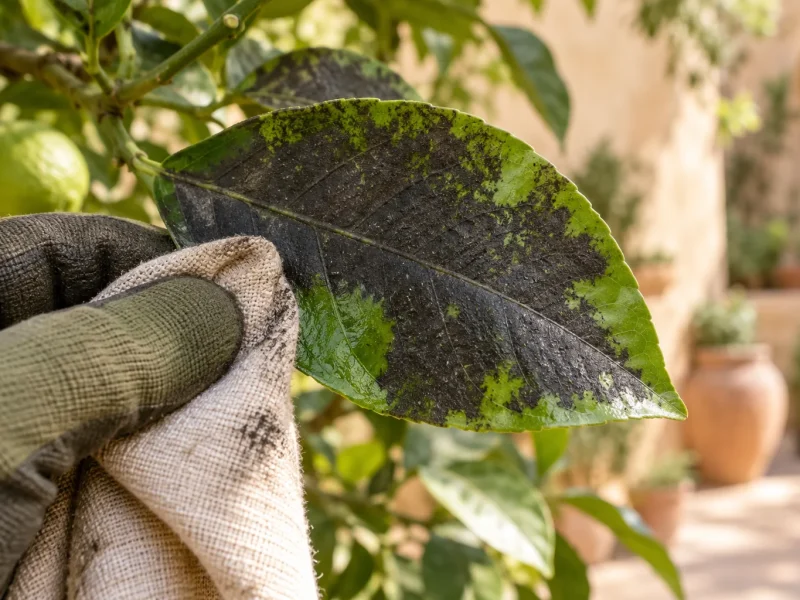
- Honeydew: sticky leaves that later turn black with sooty mould.
- Leaves that pale and yellow in patches.
Tomatoes, aubergines, citrus, hibiscus, lantanas, poinsettias and, indoors, plants with tender leaves are their favourite targets.
Getting rid of them
- Isolate the plant if it’s in a pot: the adults fly from plant to plant.
- Trap the adults with yellow sticky traps, which attract them. They also show whether the infestation is receding.
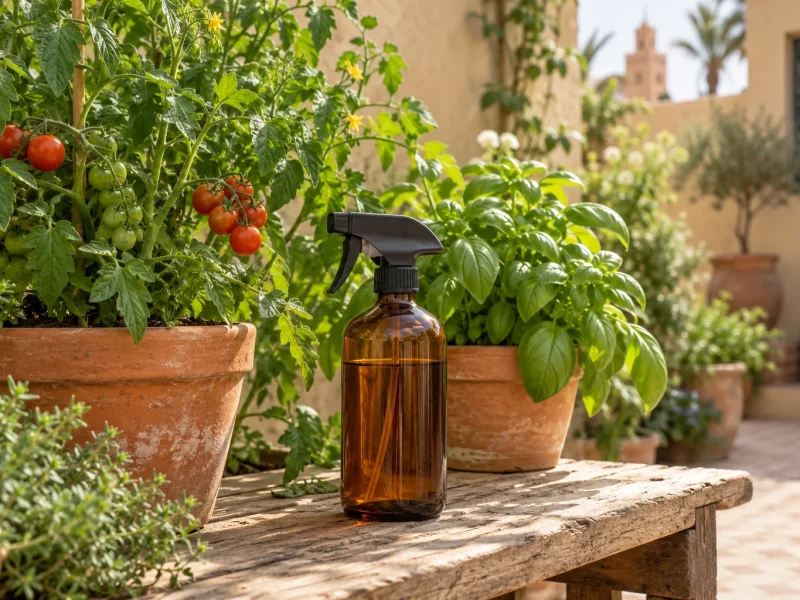
- Spray ready-to-use black soap for plants, mainly under the leaves: that’s where the larvae live, and the soap reaches them on contact. Treat early in the morning or late in the day, when the adults are slower.
- Repeat every five to seven days for three to four weeks: the protected eggs hatch in several waves.
- Remove badly affected leaves covered in larvae.
Preventing them
- Check the undersides of new plants’ leaves before bringing them in.
- Ventilate: whitefly like warm, stuffy air.
- Clean the foliage once a month with black soap, top and underside.
- Don’t overfeed: a plant fed in moderation, such as with our compost tea root feed, produces less tender tissue.
Frequently asked questions
Why do they always come back?
Because only the larvae and adults that are hit die: the eggs survive. Regular spraying is everything.
Can I treat tomatoes on the balcony?
Yes, late in the day, rinsing the fruit before eating it.
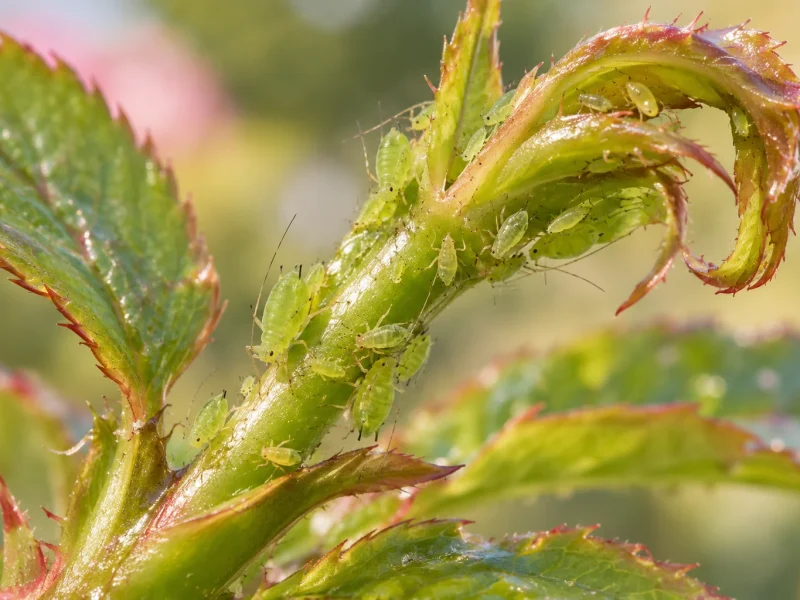
See also: sooty mould, aphids and mealybugs and scale.
Need an opinion?
Send a photo of your plant to our Plant Doctor: the whole plant, a close-up of a leaf (top and underside) and the surface of the soil. The diagnosis is free. You can also drop by the studio at 6 Rue Zemmour, Aviation district, Rabat.