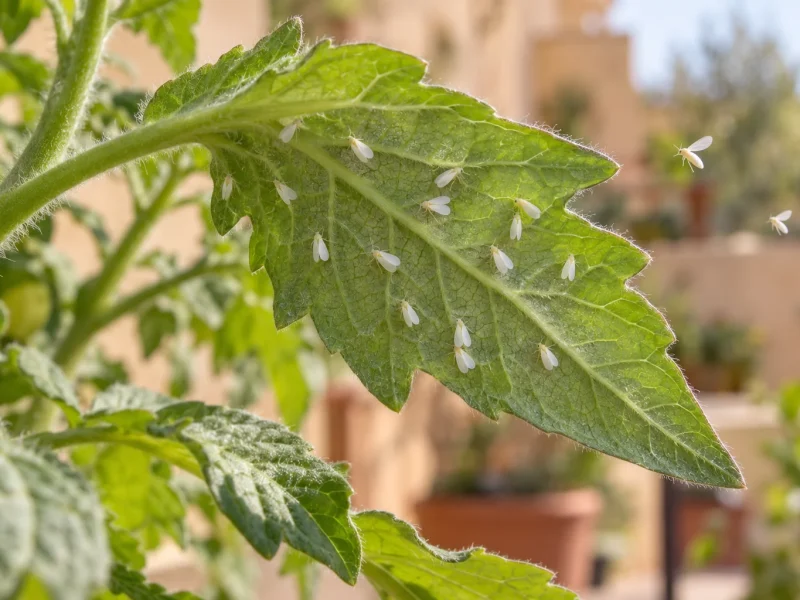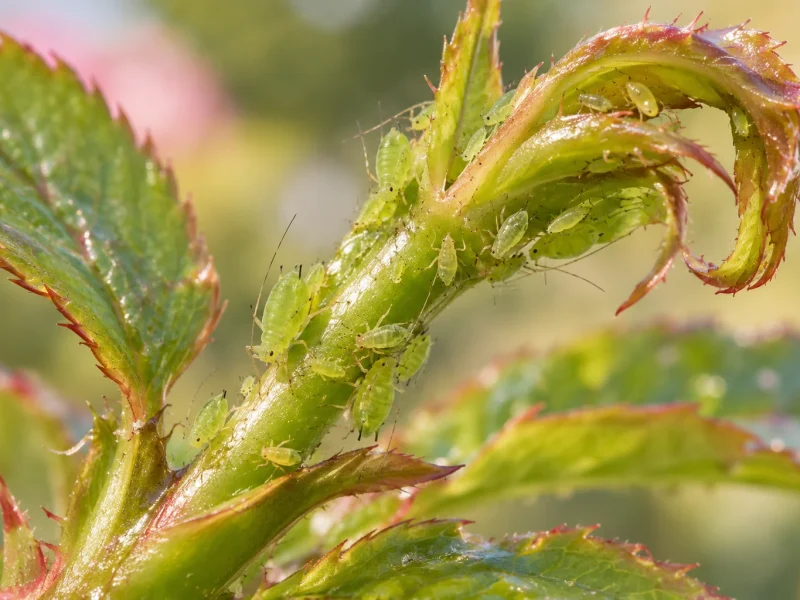
Aphids are small insects, one to three millimetres long — green, black, grey, yellow or pink — that live in colonies and suck plant sap. They’re everywhere in spring, in the garden as well as on the balcony, and they find their way indoors too. Their strength: they multiply very quickly. Their weakness: they’re soft-bodied and easy to treat if spotted early.
Recognising them
- Dense colonies on young shoots, flower buds and under leaves.
- Curled or distorted leaves, shoots that shrivel.
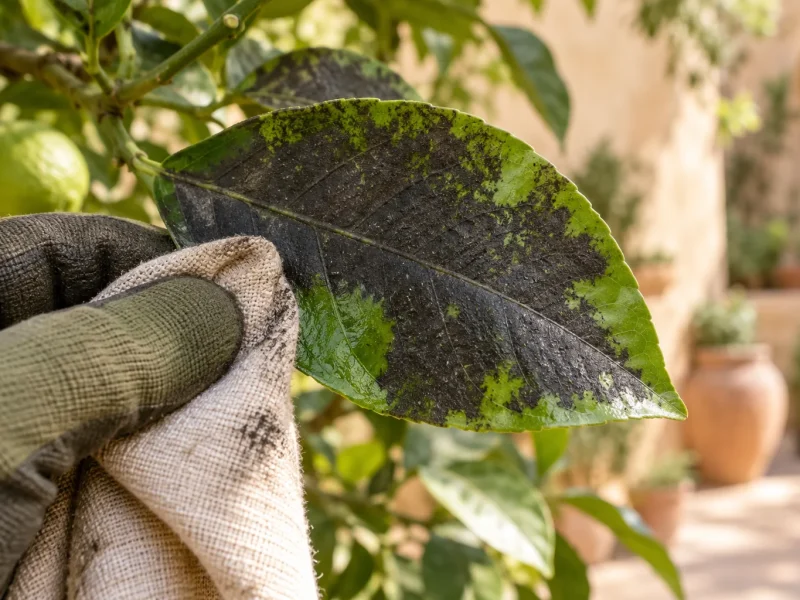
- A sticky deposit on leaves and the floor: honeydew, the sugar excreted by aphids. It attracts ants and encourages sooty mould, a black mould.
- Ants climbing up and down the stem: they “farm” aphids for their honeydew. Their presence is often the first clue.
Roses, hibiscus, oleanders, citrus and broad beans — and, indoors, flowering plants and tender young shoots — are their favourite targets.
Getting rid of them, step by step
- Remove most of the colony: a jet of water, or your fingers protected by cleaning gloves, on the worst-affected shoots. Cut off a heavily infested shoot.
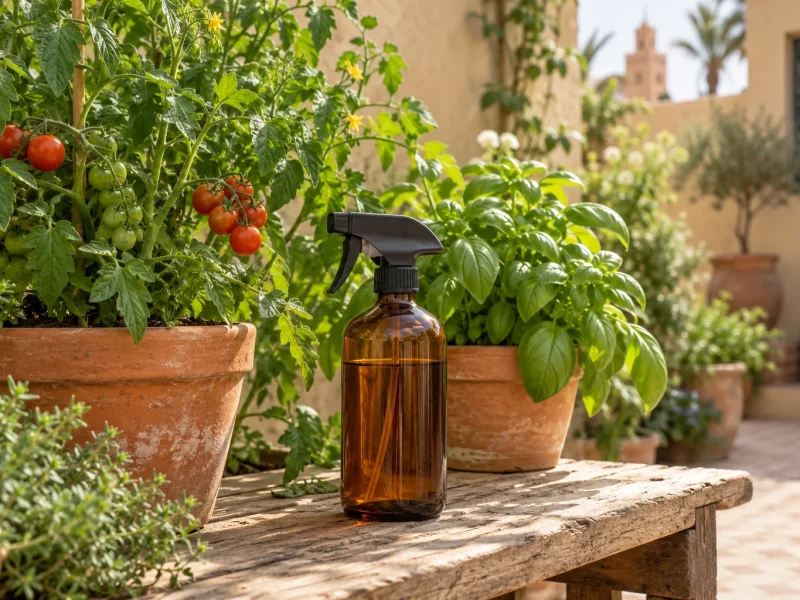
- Spray ready-to-use black soap for plants on the colonies, concentrating on the undersides of leaves and young shoots. Soap works on contact: it has to touch the insects.
- Treat late in the day, never in full sun.
- Repeat every five to seven days for three weeks: new generations hatch constantly.
- Clean off the honeydew left on the leaves with a damp cloth to prevent sooty mould.
Preventing them
- Don’t overdo nitrogen fertiliser: it produces tender, sap-filled shoots that aphids love. Choose a gentle fertiliser, such as our compost tea root feed, at the right dose.
- Check young shoots every week in spring.
- Clean the foliage once a month with black soap: it’s the simplest preventive measure.
- In the garden, let your allies do their work: ladybirds, hoverflies and tits eat aphids by the hundred.
Frequently asked questions
Do aphids kill plants?
Rarely a mature plant, but they weaken it, distort its shoots and can transmit viruses. It’s best to act at the first colony.
What about washing-up liquid?
It contains fragrances, dyes and agents that can mark leaves. A black soap prepared for plants is safer. See black soap: uses and precautions.
What should I do about the ants?
Treat the aphids: without honeydew, the ants will leave of their own accord.
Need an opinion?
Send a photo of your plant to our Plant Doctor: the whole plant, a close-up of a leaf (top and underside) and the surface of the soil. The diagnosis is free. You can also drop by the studio at 6 Rue Zemmour, Aviation district, Rabat.