A plant covered in tiny insects is one of the most disheartening sights. Black soap is often the first response, and it’s a good one: simple, inexpensive and effective against many pests. Provided you know which ones it works on, and use it properly. Badly dosed or badly applied, it damages the leaves as much as the insects. And against other pests, such as fungus gnats, it’s useless.
Guide written by the Instant T studio in Rabat, updated in October 2026.
At a glance
Black soap works on contact against soft-bodied pests: aphids, mealybugs, whitefly and spider mites. It has to touch the insect, and it has no lasting effect: so repeat the treatment every five to seven days, three or four times.
- Dosage: none for our ready-to-use black soap; a concentrated soap is diluted according to its label, never stronger. Test on a single leaf one to two days beforehand.
- When: early in the morning or late in the day, never in full sun.
- Won’t fix fungus gnats (the problem is excess moisture), or adult armoured scale (remove by hand).
- Avoid on hairy or powdery leaves, very tender young shoots and stressed plants.
Contents
- What is black soap for plants?
- How does black soap work on insects?
- Which pest, which treatment?
- How to use black soap, step by step
- Which plants don’t tolerate black soap well?
- Black soap or washing-up liquid?
- Fungus gnats: black soap isn’t the answer
- Ants: a clue not to ignore
- How do you know the treatment is working?
- Precautions to take
- Prevention is better
- When black soap isn’t enough
- Frequently asked questions
- Also worth reading
What is black soap for plants?
Black soap is a liquid soap made from saponified vegetable oils, traditionally prepared with potash. It isn’t a detergent: it can’t be replaced with washing-up liquid or a scented or coloured soap, whose additives can burn leaves. For plants, choose a black soap with no fragrance or additives.
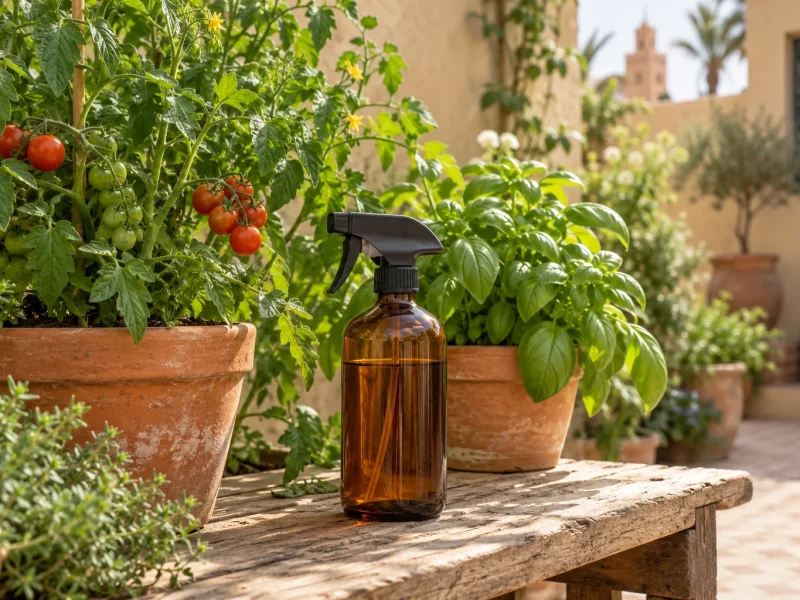
Our black soap for plants comes in a ready-to-use 200 ml spray bottle: nothing to measure — just shake and spray. It cleans the foliage and, used every month, helps protect it from pests and diseases.
How does black soap work on insects?
Black soap works on contact. It dissolves the thin protective layer of soft-bodied pests and dehydrates them. Two important consequences:
- It must touch the insects. A spray that misses its targets is useless. That means aiming at the undersides of leaves, leaf joints and stems.
- It has no lasting effect. Once dry, it no longer protects. Eggs that hatch after the treatment aren’t affected — hence the need to repeat.
Which pest, which treatment?
| Pest | How to recognise it | Is black soap effective? | Other useful action |
|---|---|---|---|
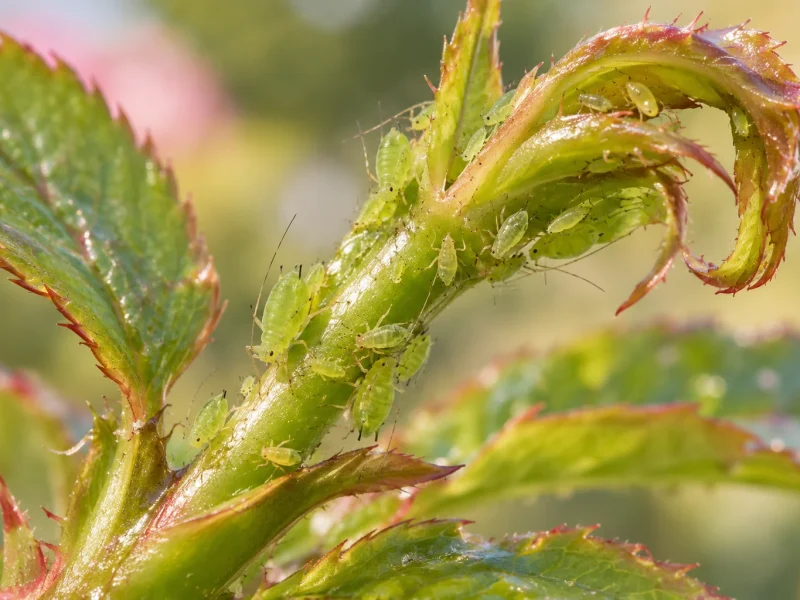
| Aphids | Green, black or yellow clusters on young shoots, sticky honeydew | Yes | Wipe off colonies, cut back badly affected shoots |
| Mealybugs | White, cottony clumps in leaf joints and under leaves | Yes, on young ones; less so on wax-protected adults | A cotton bud dipped in 70% alcohol (tested on one leaf first) |
| Armoured scale | Small, motionless brown shields on stems and veins | Not very effective on adults | Remove by hand (fingernail, soft brush), then treat the young larvae |
| Spider mites | Fine webbing, dull leaves speckled with yellow | Yes, with repeated applications | Raise the air humidity, wash the foliage with water |
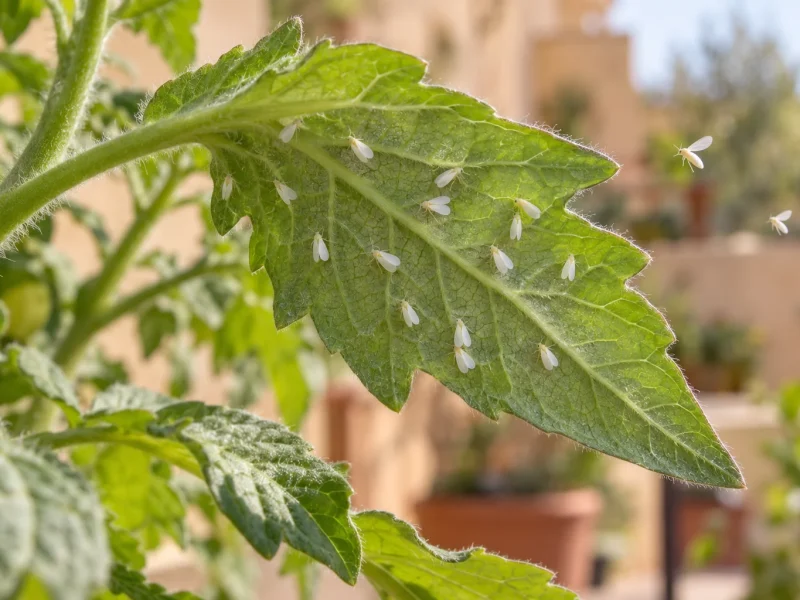
| Whitefly | Tiny white insects that fly up when you shake the plant | Effective on larvae, less so on flying adults | Yellow sticky traps, repeated treatments |
| Thrips | Silvery leaves, tiny elongated insects | Partly | Isolate, cut off badly affected leaves, treat often |
| Fungus gnats | Small black flies around the pot, larvae in damp potting mix | No | Let the potting mix dry out (see below) |
Spider mites thrive in dry air, especially in air-conditioned spaces: we explain this in our article on plants in air-conditioned offices.
How to use black soap, step by step
- Isolate the plant from the others to avoid spreading the problem.
- Respect the dosage. Our black soap is ready to use: apply it as it is, without diluting or strengthening it. A concentrated soap, on the other hand, is diluted according to its label: too strong and it burns the foliage; too weak and it doesn’t work.
- Test on a single leaf and wait one to two days. If it doesn’t react (no spots, no yellowing), you can treat the whole plant.
- Choose the right time: early in the morning or late in the day, never in full sun or intense heat.
- Protect the pot: cover the surface of the potting mix with film or a bag so the soap doesn’t run into it.
- Spray everything: tops and undersides of leaves, stems, leaf joints — wherever insects hide. A fine-mist spray bottle gives an even coating.
- Rinse with clean water after a few hours if a film remains on the foliage, especially indoors.
- Repeat every five to seven days, three or four times: a single treatment doesn’t kill the following generations.
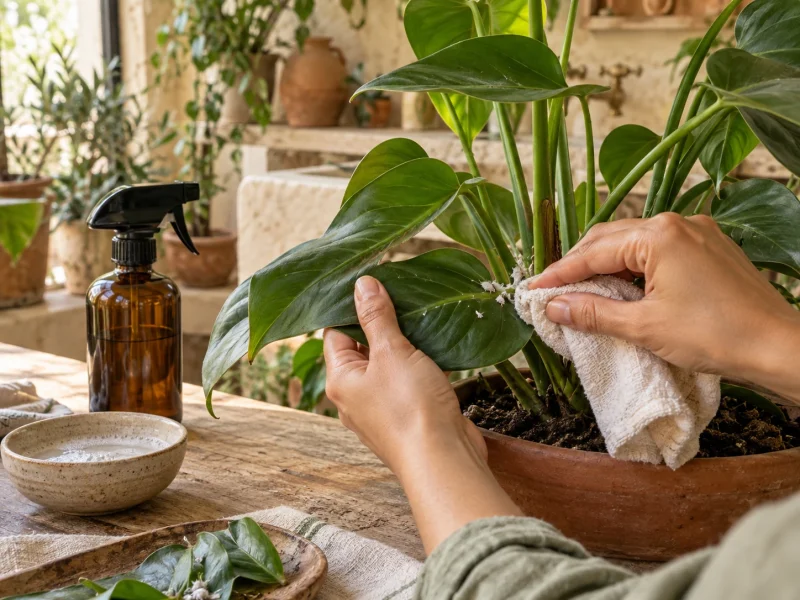
- As well, wipe off colonies with a damp cloth or cotton bud, and cut back badly affected parts.
Hard water reduces its effectiveness
Soap reacts with limescale. In hard water, it forms insoluble deposits and loses some of its effectiveness, just as in your bathroom. As tap water is hard in many Moroccan cities, it’s best to dilute a concentrated soap in rainwater or filtered water. We explain the effects of limescale on plants in tap water and your plants.
Which plants don’t tolerate black soap well?
Always test first, and be especially careful with:
- plants with hairy leaves (African violets, some Begonias);
- powdery or waxy leaves: many succulents have a fine protective bloom that rubs off;
- ferns and very tender young shoots;
- plants in flower: avoid the petals;
- plants already under stress (drought, heatwave);
- Calathea and Maranta, with their delicate leaves: test on one leaf, or opt for washing with water and wiping instead.
For simple dust on leaves, lukewarm water and a soft cloth are usually enough and avoid any risk of residue. Our plant cleaning gloves are made for this.
Black soap or washing-up liquid?
Black soap. Washing-up liquid is a detergent: it contains surfactants, fragrances and preservatives that attack the leaf cuticle and burn easily. Black soap, made for this purpose, is gentler and more predictable.
Fungus gnats: black soap isn’t the answer
The little black flies buzzing around your pots are fungus gnats. The adults are a nuisance, but it’s the larvae, living in damp potting mix, that are the problem. Black soap doesn’t treat them: the real lever is moisture.
- Let the top two to three centimetres of potting mix dry out between waterings: see when to water.
- Empty saucers and improve drainage: see our drainage guide.
- Cover the surface with a layer of pozzolana or clay pebbles: adults lay fewer eggs there.
- Put up yellow sticky traps to catch the adults.
- Check your compost or potting soil: young, immature compost attracts gnats. See how to recognise mature compost.
- There is also a treatment based on the bacterium Bacillus thuringiensis israelensis; ask a garden supplier.
Ants: a clue not to ignore
If you see ants on a plant, look for aphids or mealybugs. Ants “farm” these insects for their honeydew and protect them from predators. Treating the pests without dealing with the ants means starting again a few weeks later.
How do you know the treatment is working?
- After three or four days, you should see fewer live insects and no new colonies.
- Dead insects often stay stuck to the plant: wipe them off so you don’t mistake them for an active infestation.
- If new insects appear, repeat: eggs hatch at different times.
- If nothing changes after two or three treatments, it may be a different pest: have it identified before carrying on (a photo is often enough).
Precautions to take
- No treatment in full sun, or on a stressed plant.
- Outdoors, target the affected areas: soap also reaches beneficial insects such as ladybirds.
- Don’t pour it into a pond or waterway: it’s harmful to aquatic life, even though it’s biodegradable.
- Don’t mix it with other products.
- Keep it out of reach of children and pets.
Prevention is better
- Inspect your plants every week, looking at the undersides of the leaves.
- Quarantine new plants for about two weeks before putting them near the others.
- Avoid air that’s too dry, which encourages spider mites.
- Clean the foliage from time to time with a cloth or cleaning gloves.
- Get the basics right: a well-placed, well-watered plant is more resistant. See light and watering.
The Plant Care Kit brings together our three care products: compost tea root feed, seaweed foliar feed and black soap for plants. A well-fed plant with clean foliage, inspected every month, resists pests better. Each product is also sold separately.
When black soap isn’t enough
With a well-established infestation, several treatments aren’t always enough. Cut back badly affected parts, isolate the plant and continue treatment over several weeks. If nothing changes, have the pest identified before carrying on: a photo sent on WhatsApp to 06 61 05 26 38 often helps settle the question. If the plant is beyond saving, it’s better to throw it away than let it infect the others.
Frequently asked questions
Does black soap kill mealybugs?
It works well on mealybugs and young larvae, less so on adults protected by a shield or a waxy coating. In that case, remove them by hand before treating.
Does black soap get rid of fungus gnats?
No. Fungus gnats are a problem of damp potting mix. Let the surface dry, empty saucers and cover the mix with pozzolana or clay pebbles.
What dilution of black soap for plants?
None for our ready-to-use black soap: spray it as it is. For a concentrated soap, follow its label: the dilution varies with the concentration, which is why no single figure applies to every bottle. Test on one leaf before treating the whole plant.
How often should you apply black soap?
Every five to seven days, three or four times, until the insects have completely disappeared. One application isn’t enough.
Can black soap be used on all houseplants?
No. Hairy, powdery or very tender leaves don’t tolerate it well. Always test on one leaf and wait one to two days.
Does black soap leave a smell?
It has a distinctive smell that fades as it dries. Rinsing with clean water a few hours after treatment reduces it.
Can I treat a plant that’s near cats or dogs?
Treat the plant out of their reach, let it dry, then put it back in its place. Black soap must be kept out of reach of pets.
Where can I buy black soap for plants in Rabat?
Our ready-to-use black soap for plants, in a 200 ml spray bottle, is available online, with delivery (40 MAD) and payment on delivery, or for collection from the studio at 6 Rue Zemmour, Aviation district.
Also worth reading
- Plants in an air-conditioned office
- Is tap water harming your plants?
- Drainage: clay pebbles, pots without holes, saucers
- When should you water your plants?
- Repotting a houseplant
Not sure what’s attacking your plant? Send us a photo on WhatsApp at 06 61 05 26 38. The studio is at 6 Rue Zemmour, Aviation district, Rabat, Monday to Saturday, 11am to 3pm. The Gardening & Plants Morning (150 MAD) also has a “Plant Doctor” corner.