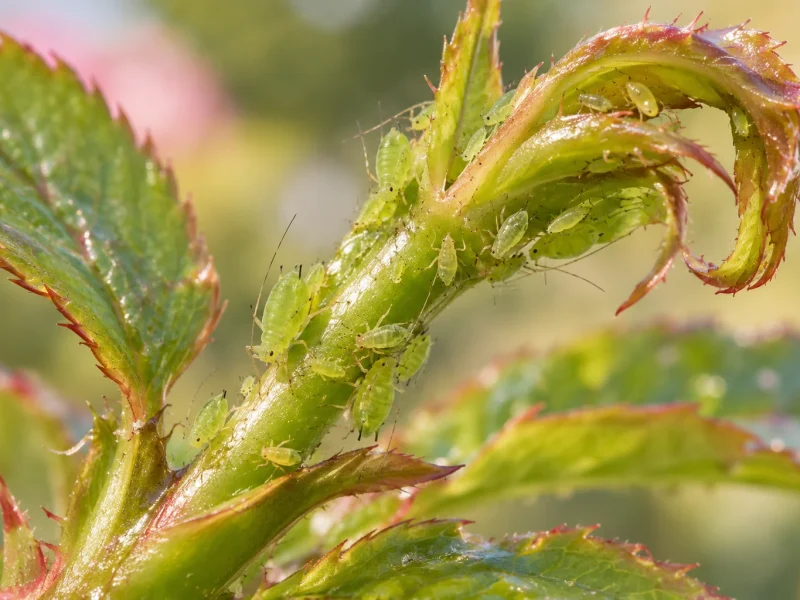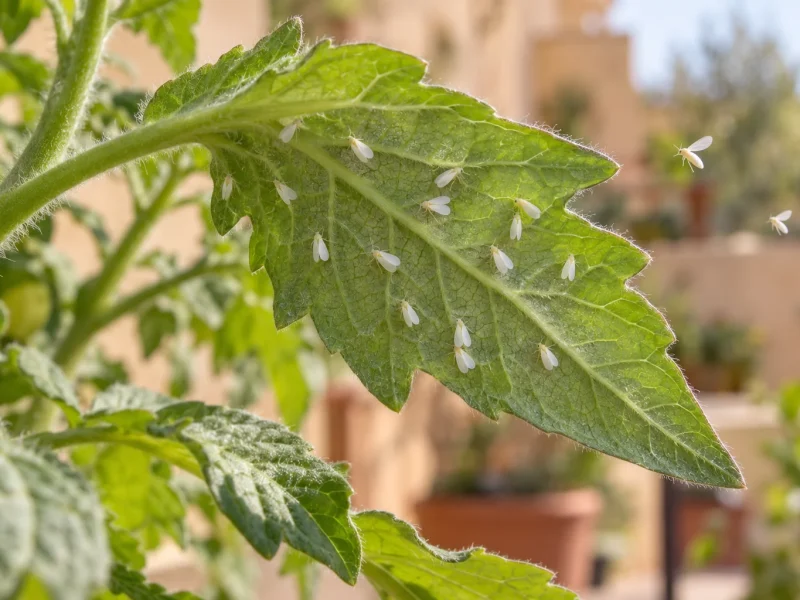
Thrips are minute, elongated insects one to two millimetres long, very common in Moroccan crops and happy to move into our homes. They rasp the surface of leaves to suck out the contents. Discreet and quick, they hide under leaves and in young shoots; you often notice the damage before you see them.
Recognising them
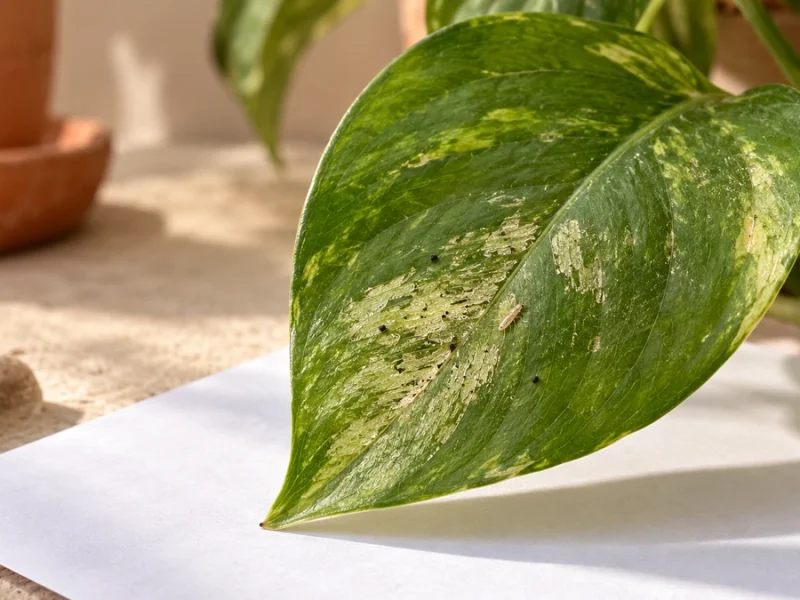
- Silvery or bleached patches on the leaves, as if the surface had been scratched.
- Tiny shiny black dots in the middle of these patches: these are their droppings.
- Young leaves that are distorted or marked as soon as they emerge.
- The insects themselves: shake a leaf over a sheet of white paper and you’ll see tiny pale or dark slivers moving.
Monsteras, Philodendrons, Anthuriums, Ficus and flowering plants are among their favourite targets.
Getting rid of them
- Isolate the plant: thrips fly and jump from one plant to another.
- Shower the foliage, top and especially underneath, to knock off as many insects as possible. Cover the soil so they don’t fall into it.
- Spray ready-to-use black soap over the whole plant, concentrating on the undersides of leaves and the heart of young shoots.
- Repeat every four to five days for three to four weeks: their larvae hide, and part of their life cycle takes place in the soil.
- Scrape off and replace the top layer of soil to a depth of one or two centimetres, where the pupae hide.
Blue or yellow sticky traps pushed into the pot let you track the infestation and know when it’s over.
Preventing them
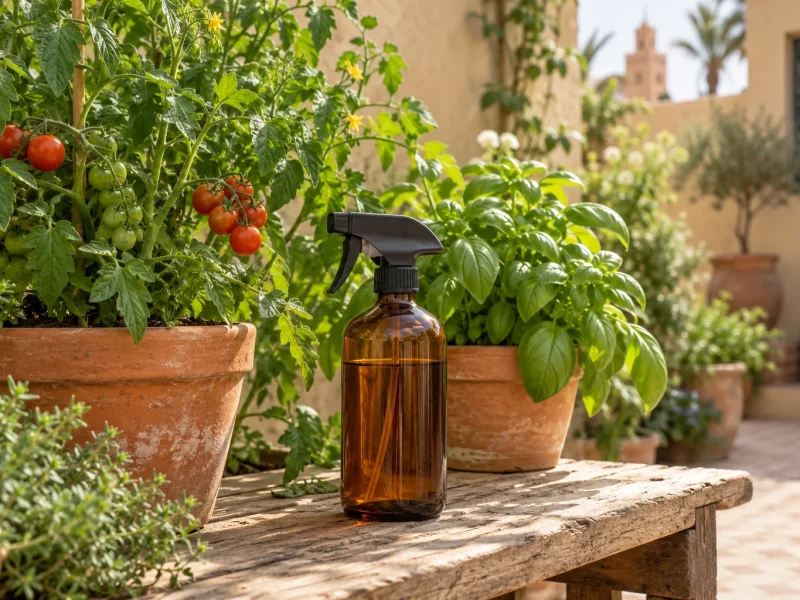
- Thrips like hot, dry air: misting around plants with a fine-mist spray bottle disrupts them.
- Inspect new plants and bunches of cut flowers, which often bring them into the house.
- Clean the foliage regularly: you’ll spot the first silvery marks early.
Need an opinion?
Send a photo of your plant to our Plant Doctor: the whole plant, a close-up of a leaf (top and underside) and the surface of the soil. The diagnosis is free, and you can also drop by the studio at 6 Rue Zemmour, Aviation district, Rabat, Tuesday to Saturday, 10am to 6pm.