
Calathea
Foliage that looks hand-drawn, rising in the evening and lowering in the morning, and safe for pets. Our Calathea, and the guide to keeping them beautiful.
- 40 DH delivery, whatever the city
- Cash on delivery
- Damaged plant: replaced
- Studio in Rabat · Tue–Sat 10:00–18:00
New
The Instant T range
Four steps to healthy plants
 Step 1 · SoilSignature Potting MixA potting mix for repotting, with compost and biochar instead of peat.2 L · 5 L · د.م. 39,00 – د.م. 59,00Price range: د.م. 39,00 through د.م. 59,00→
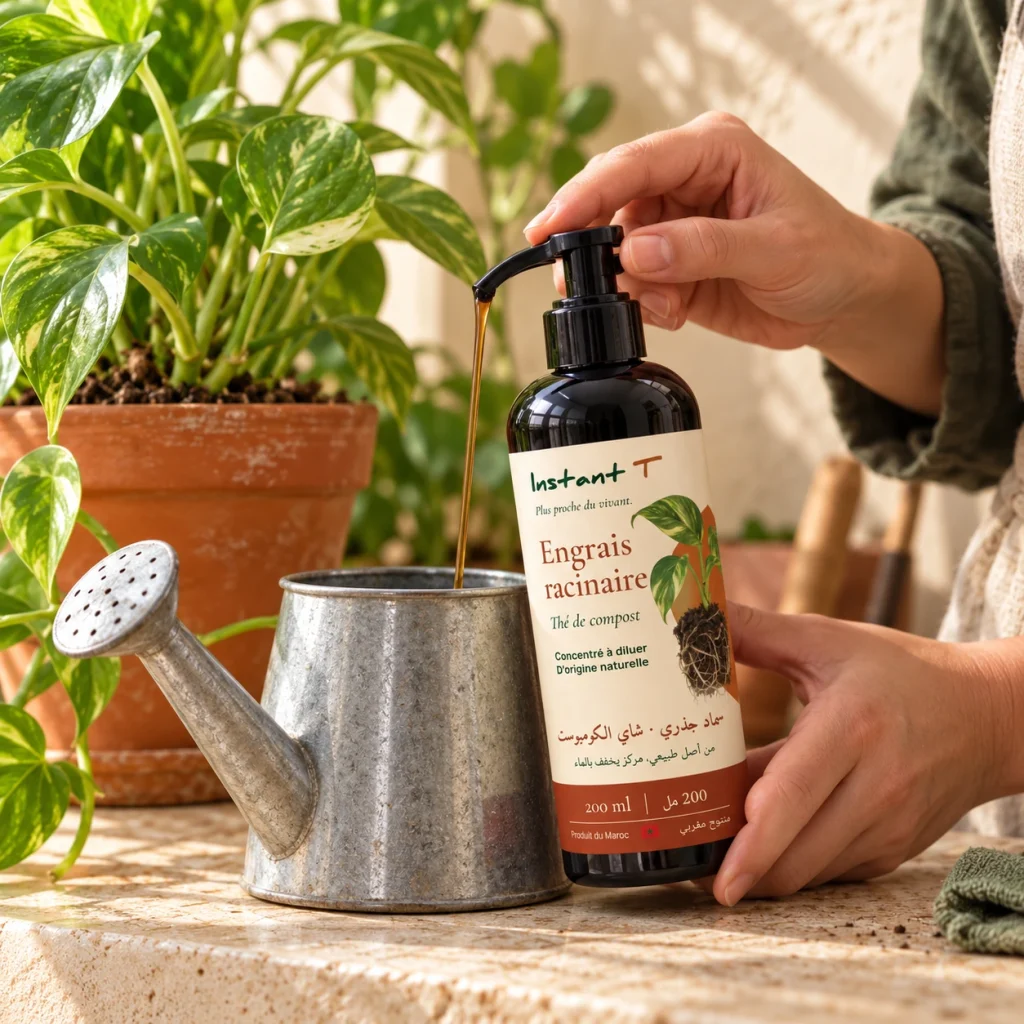 Step 2 · NutritionRoot feed — compost teaA concentrated compost tea to feed the roots and the life in the soil: one bottle makes 20 litres of watering.200 ml · د.م. 99,00→
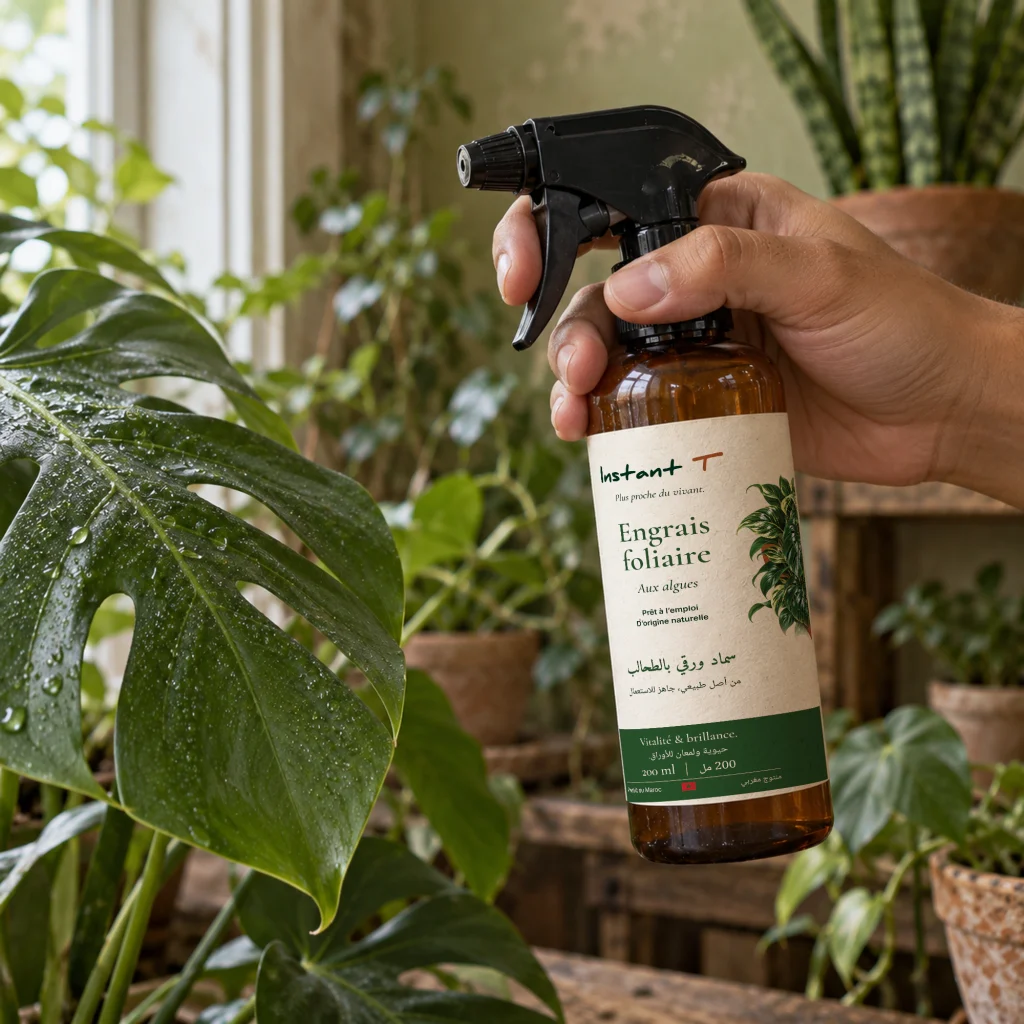 Step 3 · FoliageFoliar feed — seaweedA seaweed extract to support the foliage, sprayed on.200 ml · د.م. 89,00→
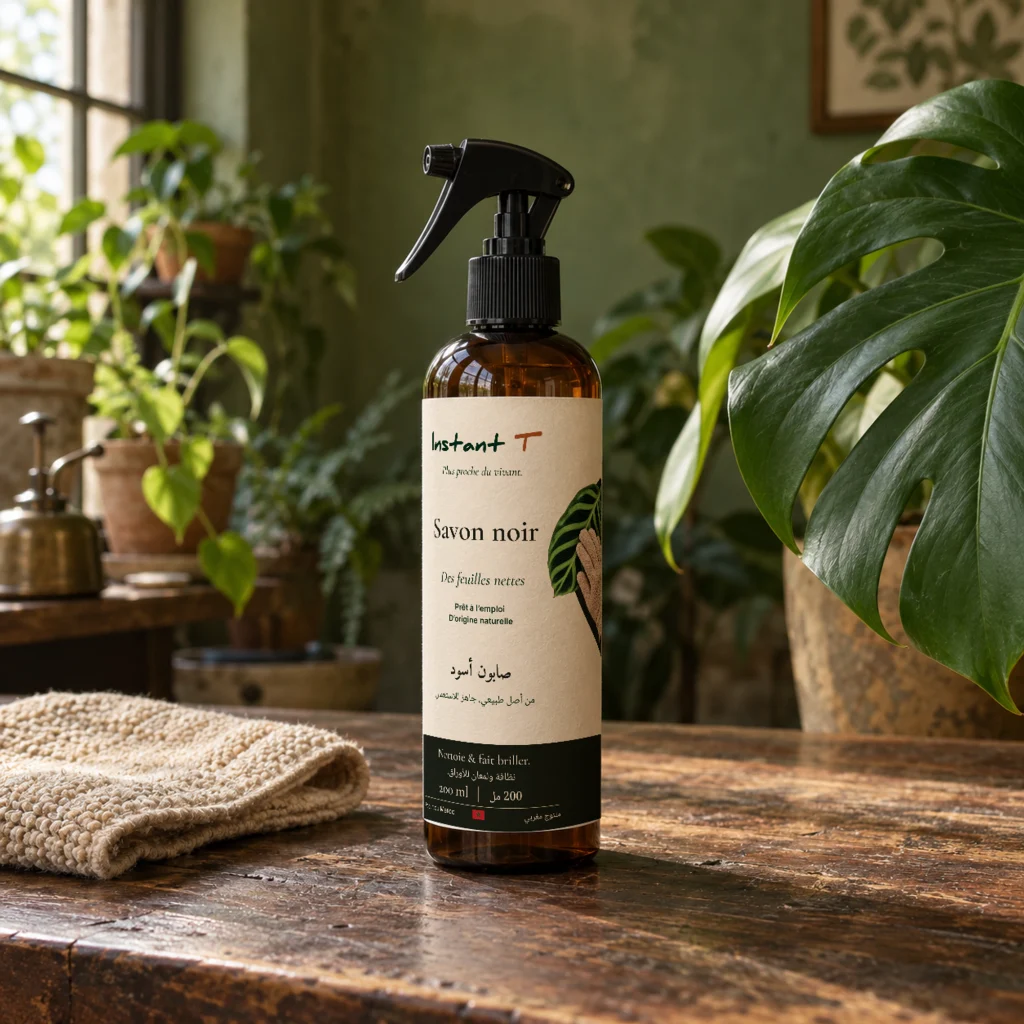 Step 4 · ProtectionBlack soap for plantsA ready-to-use black soap that cleans the foliage and helps protect it against pests and diseases.200 ml · د.م. 45,00→
Where to start?
I'm a beginner
Plants that forgive
21 products
Low light
For dark rooms
12 products
My pets
Safe for cats and dogs
7 products
Gifts
Plants, arrangements, creations
23 products
Care & potting mixes
Potting mixes, plant food, tools
18 products
Not sure? Find your plant in 5 questions or ask for advice on WhatsApp.


Calathea, a plant that moves
Calatheas belong to the Marantaceae family and come from the humid forest understorey of tropical America. Since 2012, botanists have moved most species into the genus Goeppertia, but Calathea remains the trade name. Their leaves move over the course of the day, thanks to a small joint at the base of each leaf: this is called nyctinasty. They are plants of soft light and humid air, a little demanding, but spectacular when well placed. And they are safe for cats and dogs.
Growing passport
Ease of care
Light needs
Water needs
Air humidity
Temperature18 to 27 °C, never below 15 °C
Cats, dogsSafe for pets
Species and varieties
| Species or variety | What sets it apart |
|---|---|
| Goeppertia orbifolia | Large round leaves striped with silver. The most beautiful, and the most demanding in humidity. |
| Goeppertia insignis (lancifolia) | The ‘Rattlesnake’: long, wavy, spotted leaves. The most tolerant. |
| Goeppertia rufibarba | Velvety, wavy leaves, purple underneath. |
| Goeppertia makoyana | The ‘peacock plant’: finely patterned, almost translucent leaves. |
| Goeppertia roseopicta | Round leaves with pink or silver patterning (‘Medallion’, ‘Dottie’). |
Caring for them in Morocco
- Light: soft and filtered, never direct sun, which fades the patterns.
- Watering: keep the soil always moist, without soaking it. Water with water left to stand overnight: the hard water in our cities browns the tips of delicate leaves.
- Humidity: this is the key: mist around them with a fine mist sprayer, group them with other plants, or stand the pot on a tray of damp pebbles. Away from air conditioning.
- Potting mix: moist and airy: our Signature Potting Mix.
Reading the symptoms
- Brown, dry edges: air too dry or hard water: the most common symptom.
- Curled leaves: thirst or dry air: water, then raise the humidity.
- Fading patterns: too much direct light.
- Dull, speckled leaves, fine webs: spider mites, encouraged by dry air: shower the foliage and treat with black soap.
A plant you're worried about? Send a photo to the Plant Doctor.
Sources: Plants of the World Online (Royal Botanic Gardens, Kew) for names and origin; Royal Horticultural Society for cultivation; ASPCA for toxicity; and our own practice at the Rabat studio. Growing guidelines are averages: the light and air in your home matter more than anything.
Delivery anywhere in Morocco for 40 DH, cash on delivery, or collection from the studio, 6 Rue Zemmour, Aviation district, Rabat.
Frequently asked questions
Why do my Calathea's leaves move?
It's normal: it raises its leaves in the evening and lowers them in the morning. A movement that shows it's in good shape.
Is Calathea toxic to cats?
No: Calatheas are considered safe for cats and dogs.
What water for a Calathea?
Water low in limescale: tap water left to stand overnight, filtered water or rainwater. Hard water browns the leaf edges.