
Ficus
Ficus lyrata, Ficus elastica, Ficus retusa: large glossy leaves and a tree-like habit. Our Ficus, and the guide to helping them keep their leaves.
- 40 DH delivery, whatever the city
- Cash on delivery
- Damaged plant: replaced
- Studio in Rabat · Tue–Sat 10:00–18:00
New
The Instant T range
Four steps to healthy plants
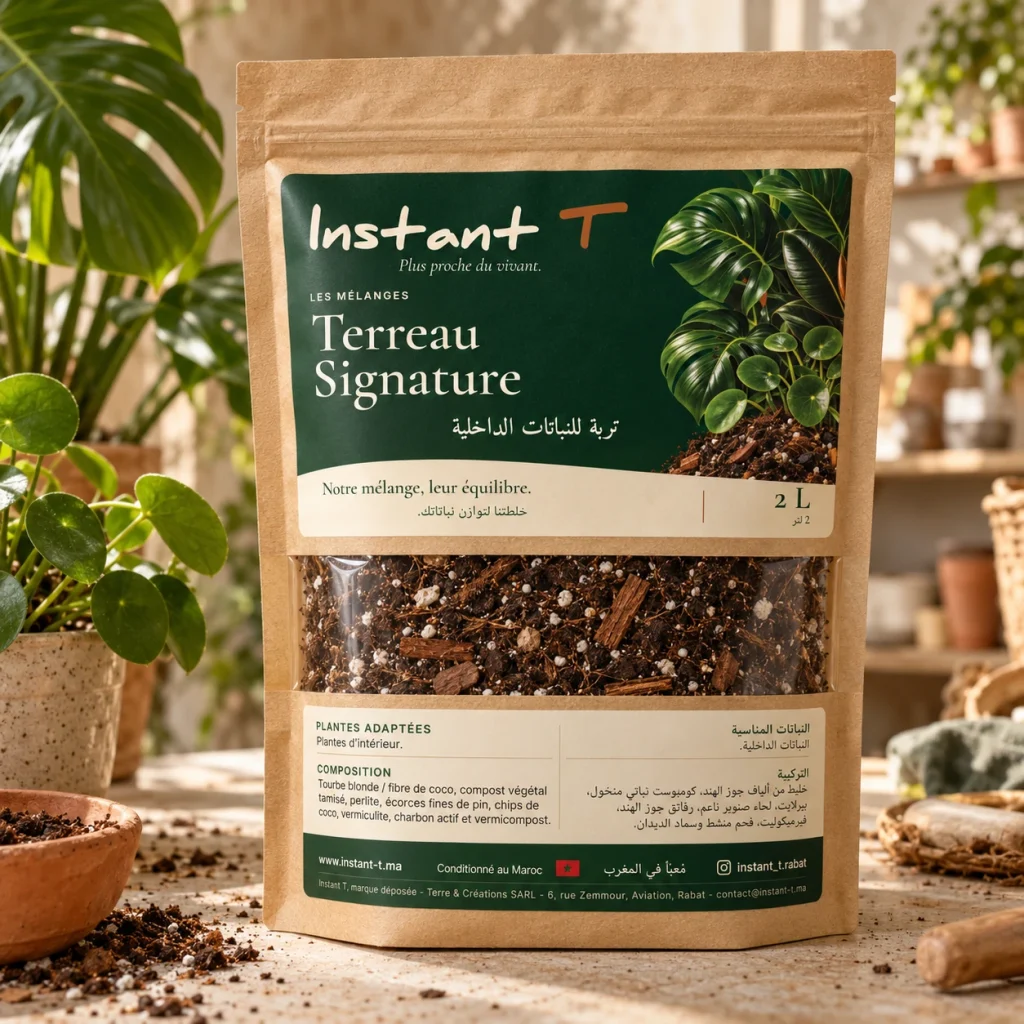 Step 1 · SoilSignature Potting MixA potting mix for repotting, with compost and biochar instead of peat.2 L · 5 L · د.م. 39,00 – د.م. 59,00Price range: د.م. 39,00 through د.م. 59,00→
 Step 2 · NutritionRoot feed — compost teaA concentrated compost tea to feed the roots and the life in the soil: one bottle makes 20 litres of watering.200 ml · د.م. 99,00→
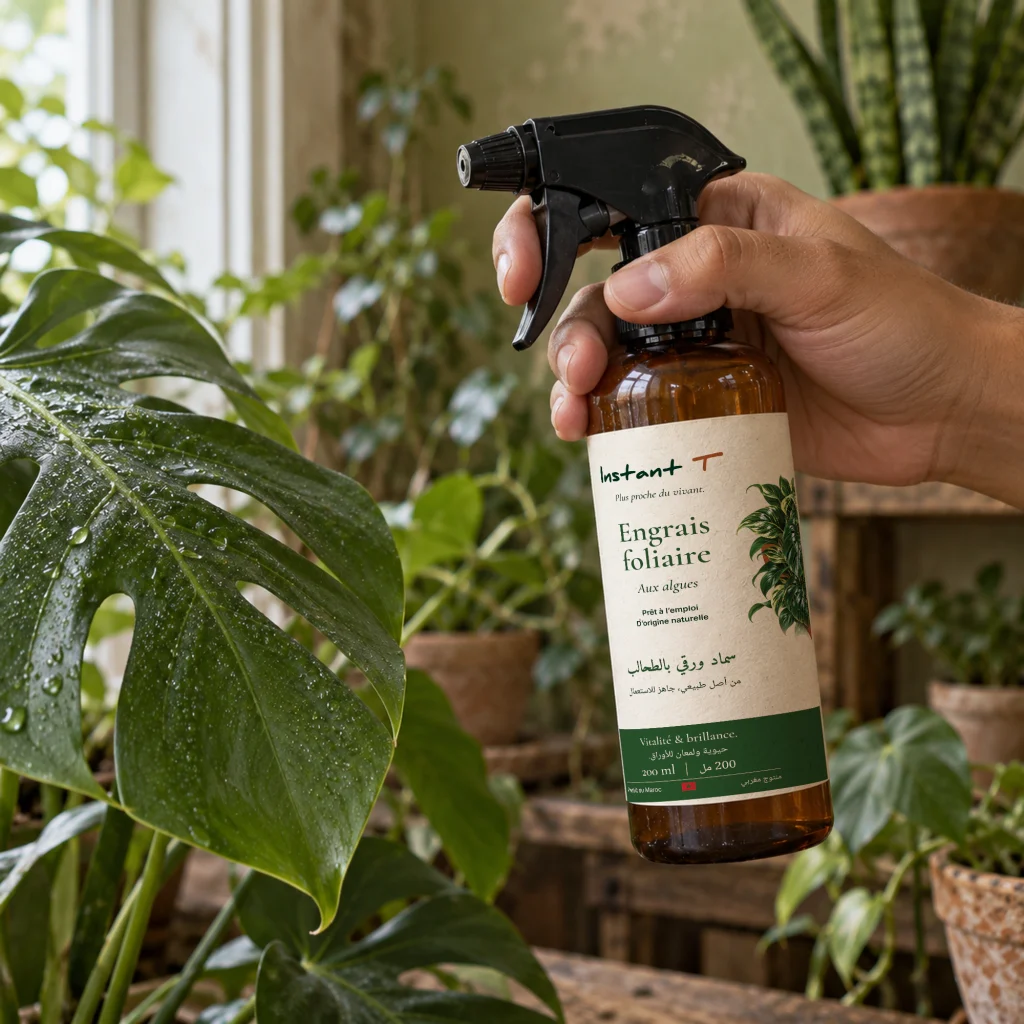 Step 3 · FoliageFoliar feed — seaweedA seaweed extract to support the foliage, sprayed on.200 ml · د.م. 89,00→
 Step 4 · ProtectionBlack soap for plantsA ready-to-use black soap that cleans the foliage and helps protect it against pests and diseases.200 ml · د.م. 45,00→
Where to start?
I'm a beginner
Plants that forgive
21 products
Low light
For dark rooms
12 products
My pets
Safe for cats and dogs
7 products
Gifts
Plants, arrangements, creations
23 products
Care & potting mixes
Potting mixes, plant food, tools
18 products
Not sure? Find your plant in 5 questions or ask for advice on WhatsApp.


 −22 %
Houseplants
Ficus elastica Abidjan, large
- Easy
- Very bright
Original price was: د.م. 450,00.د.م. 350,00Current price is: د.م. 350,00.
Ficus, a tree that likes its spot
The genus Ficus, in the mulberry family (Moraceae), has more than 800 species across the world's tropical regions, including the fig tree we know so well in Morocco. Several have become indoor classics, and some, like Ficus microcarpa, shade the avenues of our cities. All have a white sap, latex, and the same character: lots of light, and a spot you no longer change.
Growing passport
Ease of care
Light needs
Water needs
Air humidity
Temperature15 to 28 °C, away from draughts
Cats, dogsIrritating sap, toxic
Species and varieties
| Species or variety | What sets it apart |
|---|---|
| Ficus lyrata | The fiddle-leaf fig: large, ribbed, violin-shaped leaves. Spectacular, a little more demanding. |
| Ficus elastica ‘Abidjan’ | The rubber plant with almost black foliage. The toughest and the easiest. |
| Ficus elastica ‘Belize’ | Variegated with cream, pink and green. Needs more light to keep its colours. |
| Ficus elastica ‘Tineke’ | Variegated green and cream, without the pink of ‘Belize’. |
| Ficus retusa / microcarpa | Small leaves, thick trunk: the Ficus used for bonsai and kokedama. |
| Ficus benjamina | Small leaves on weeping branches. Famous for dropping its leaves when moved. |
| Ficus pumila | A creeping Ficus with tiny leaves, which trails or covers the potting mix. |
Caring for it in Morocco
- Light: as much as possible, near a large window. A little gentle morning sun does it good; scorching afternoon sun behind glass does not.
- A fixed spot: a Ficus that's moved, turned abruptly or put in a draught loses leaves. Find it a spot and keep it there.
- Watering: when the soil is dry a few centimetres down, generously, then empty the saucer.
- Leaves: wipe them regularly with cleaning gloves: city dust dulls them quickly.
- Pruning: in spring, wearing gloves: the white sap irritates the skin. The Ficus branches out below the cut.
Reading the symptoms
- It's losing its leaves: a change of spot, a draught, cold or lack of light. Stop moving it and wait a few weeks.
- Brown spots on a Ficus lyrata: overwatering or a cold snap; let the soil dry out for longer.
- Sticky leaves, small brown shells: scale insects: clean, then treat with ready-to-use black soap.
- Long stem with widely spaced leaves: lack of light.
Not sure? Send a photo to the Plant Doctor.
Sources: Plants of the World Online (Royal Botanic Gardens, Kew) for names and origin; Royal Horticultural Society for cultivation; ASPCA for toxicity; and our own practice at the Rabat studio. Growing guidelines are averages: the light and air in your home matter more than anything.
Delivery anywhere in Morocco for 40 DH, cash on delivery, or collection from the studio, 6 Rue Zemmour, Aviation district, Rabat.
Frequently asked questions
Why is my Ficus losing its leaves?
Most often because its position, light or temperature has changed. Place it near a window, away from draughts, and stop moving it: it will grow new leaves within a few weeks.
Ficus lyrata or Ficus elastica?
Ficus elastica is tougher and tolerates medium light. Ficus lyrata is more spectacular, but needs a very bright room and a stable spot.
Is Ficus toxic?
Its white sap irritates the skin and is toxic to cats and dogs if they chew it. Wear gloves to prune it.
Can a Ficus go outdoors in Morocco?
Many Ficus live outdoors on the coast, in partial shade and sheltered from the wind. A plant used to being indoors must be moved outside gradually, never straight into full sun.