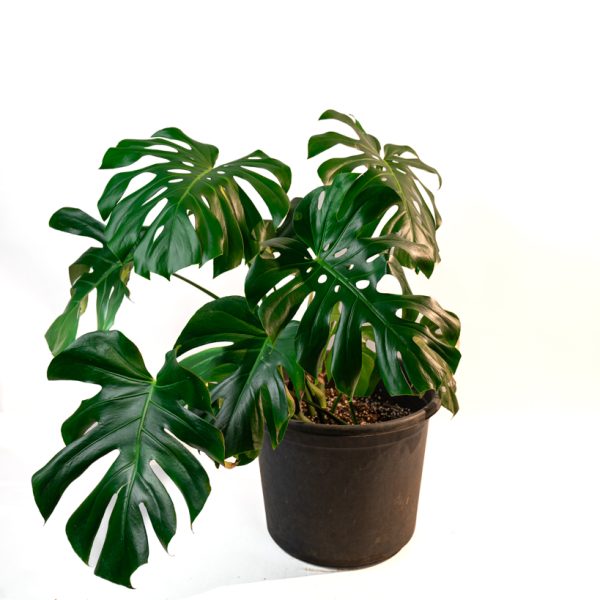
Monstera
Monstera deliciosa, Monstera adansonii and their climbing cousins: large split or perforated leaves, and the guide to getting them to split in your home.
- 40 DH delivery, whatever the city
- Cash on delivery
- Damaged plant: replaced
- Studio in Rabat · Tue–Sat 10:00–18:00
New
The Instant T range
Four steps to healthy plants
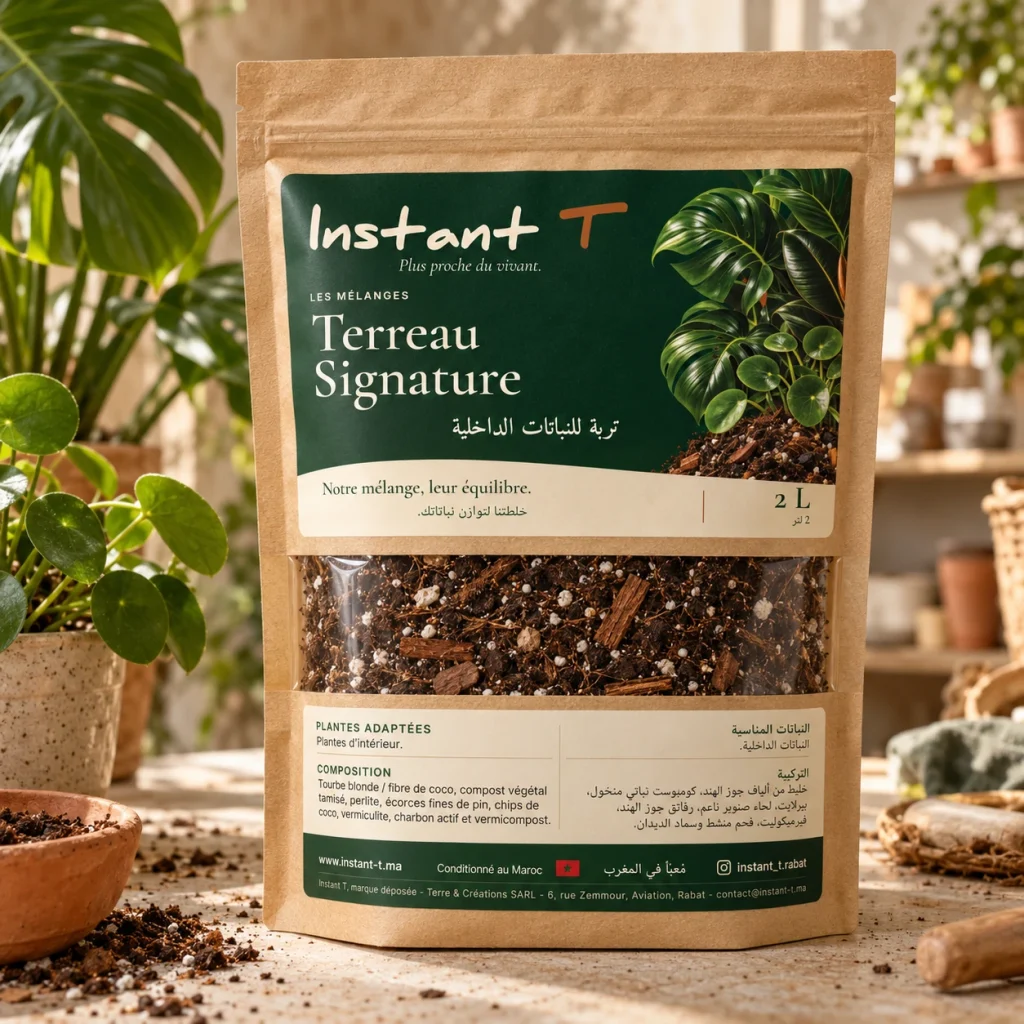 Step 1 · SoilSignature Potting MixA potting mix for repotting, with compost and biochar instead of peat.2 L · 5 L · د.م. 39,00 – د.م. 59,00Price range: د.م. 39,00 through د.م. 59,00→
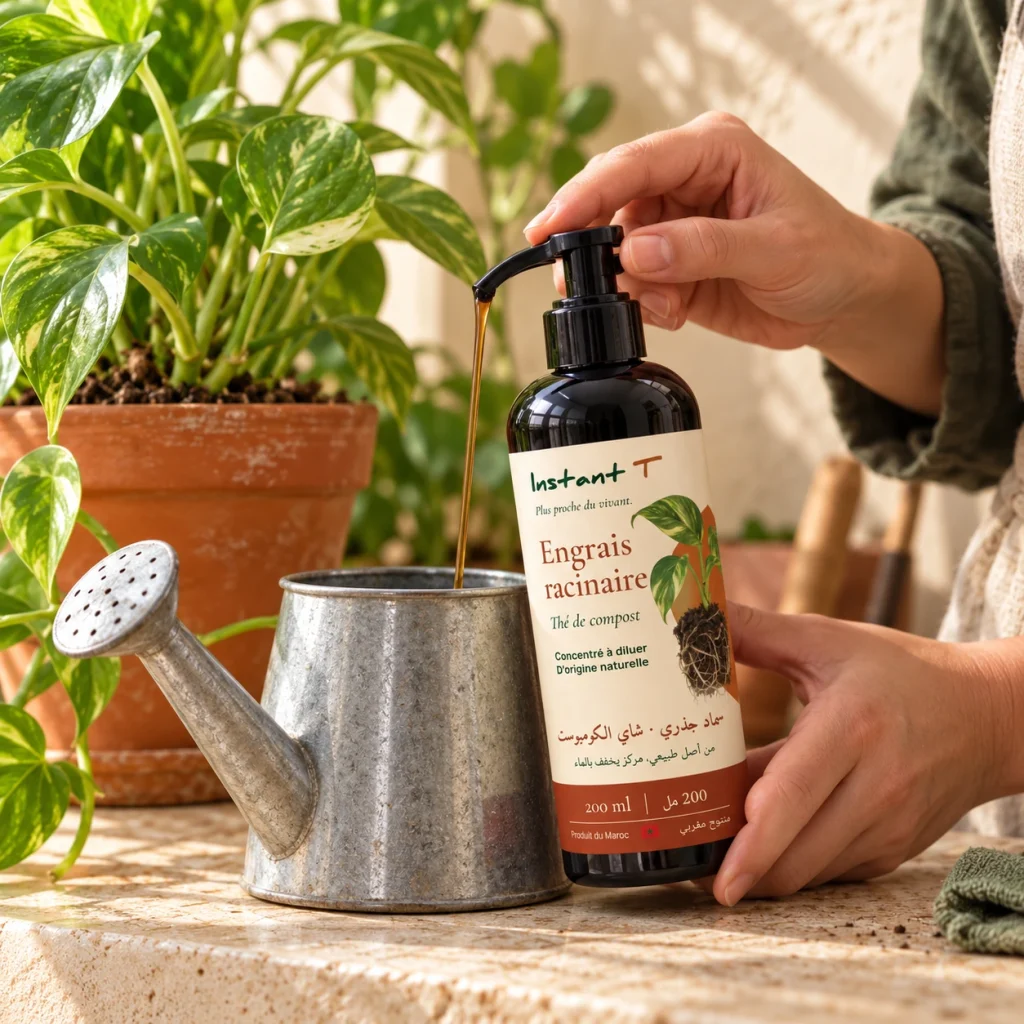 Step 2 · NutritionRoot feed — compost teaA concentrated compost tea to feed the roots and the life in the soil: one bottle makes 20 litres of watering.200 ml · د.م. 99,00→
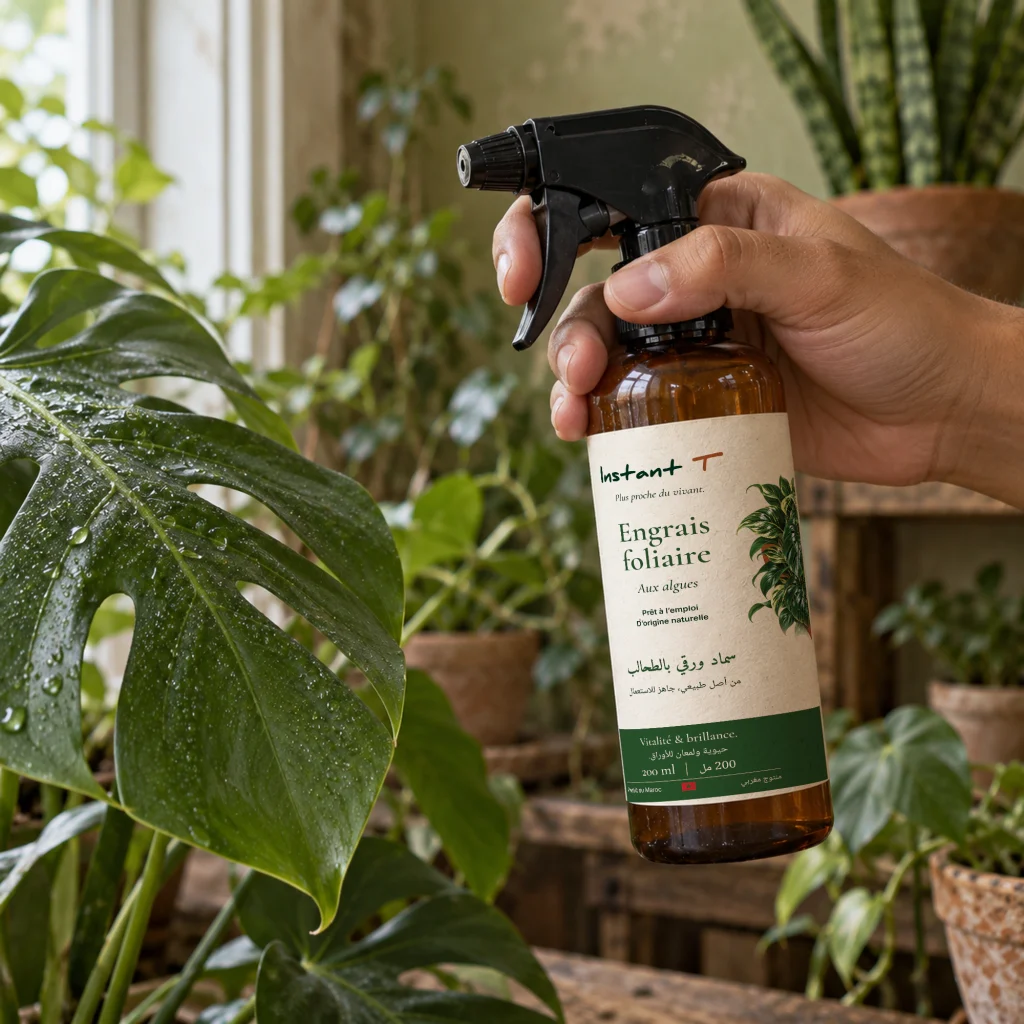 Step 3 · FoliageFoliar feed — seaweedA seaweed extract to support the foliage, sprayed on.200 ml · د.م. 89,00→
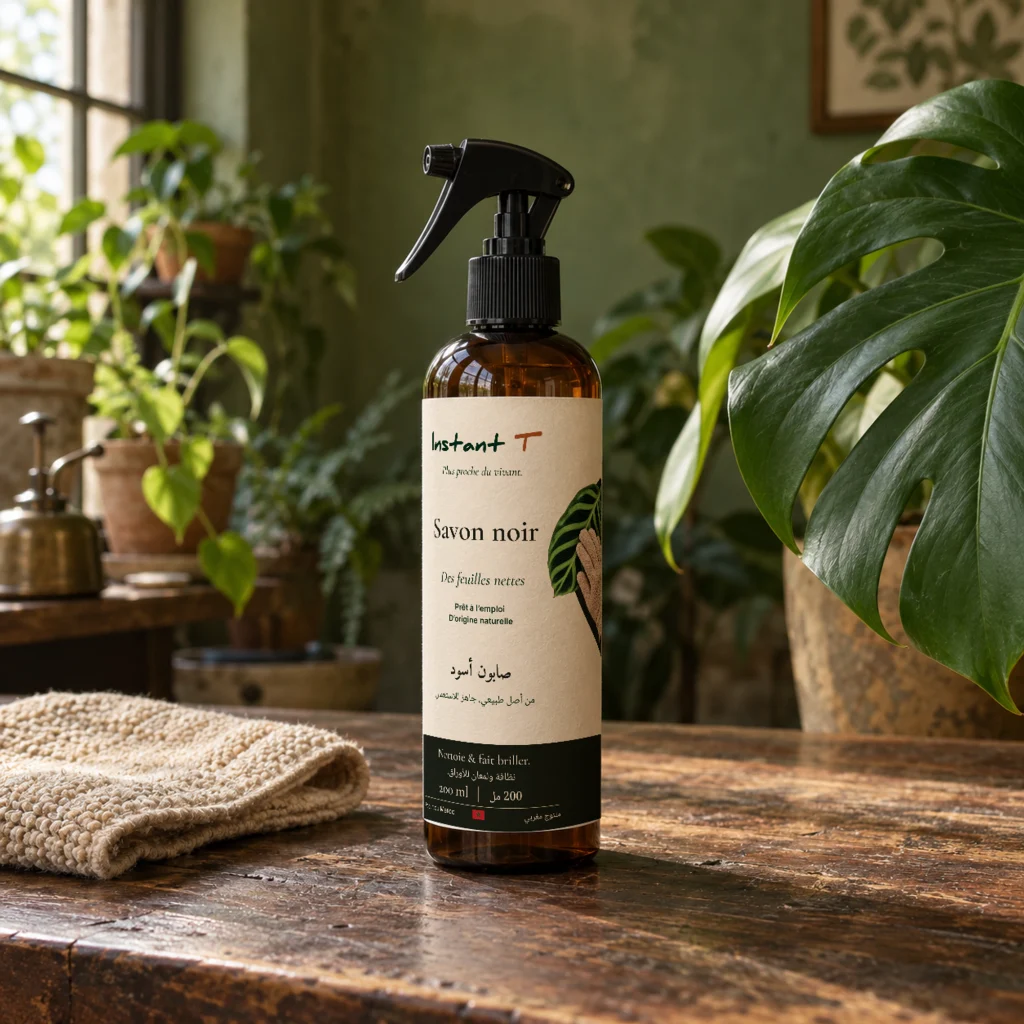 Step 4 · ProtectionBlack soap for plantsA ready-to-use black soap that cleans the foliage and helps protect it against pests and diseases.200 ml · د.م. 45,00→
Where to start?
I'm a beginner
Plants that forgive
21 products
Low light
For dark rooms
12 products
My pets
Safe for cats and dogs
7 products
Gifts
Plants, arrangements, creations
23 products
Care & potting mixes
Potting mixes, plant food, tools
18 products
Not sure? Find your plant in 5 questions or ask for advice on WhatsApp.


Monstera, a vine that changes with age
The genus Monstera, in the aroid family, includes some sixty species of vines native to tropical America, from Mexico to Brazil. In the wild it climbs trees: its aerial roots look for support, and its leaves grow larger and more split as it climbs towards the light. In your home it's the same: a moss pole and light give large split leaves.
Growing passport
Ease of care
Light needs
Water needs
Air humidity
Temperature17 to 28 °C, never below 12 °C
Cats, dogsToxic if chewed
Species and varieties
| Species or variety | What sets it apart |
|---|---|
| Monstera deliciosa | The great classic: giant leaves, split and perforated with age. Can grow taller than 2 m indoors. |
| Monstera adansonii | Thinner leaves, perforated with holes from an early age. Climbs or trails, grows fast. |
| Monstera deliciosa ‘Thai Constellation’ | Stable cream-speckled foliage. Grows more slowly, needs more light. |
| Monstera ‘Albo Variegata’ | Large white areas on the leaves. Rare and fragile: the white parts burn quickly. |
| Monstera dubia, siltepecana, standleyana | Collectors' species: leaves pressed flat against their support or silvery when young. |
| Rhaphidophora decursiva | Not a Monstera, but a cousin from the same family with split leaves: often sold as an alternative. |
Caring for it in Morocco
- Light: bright and indirect, one or two metres from a window. In a dark corner it survives but makes small, whole leaves.
- Watering: when the top 3 to 4 centimetres are dry. Less in winter.
- Support: a moss or coir pole fixed in the pot gives larger, more split leaves. Guide the aerial roots onto it.
- Potting mix and food: our Signature Potting Mix, and compost tea root feed every two to three weeks in spring and summer.
- Summer in Rabat: no midday sun behind glass, and no direct blast of air conditioning.
Reading the symptoms
- Leaves without holes: a young plant or lack of light; with age and a moss pole, the splits will come.
- Yellow leaves: most often overwatering: let the soil dry out for longer.
- Dry brown spots: direct sun or air that's too dry.
- Droplets at the leaf tips: that's guttation: the soil is quite wet, so water a little less often.
- White cottony clusters: mealybugs: clean, then treat with ready-to-use black soap.
Not sure? Send a photo to the Plant Doctor.
Sources: Plants of the World Online (Royal Botanic Gardens, Kew) for names and origin; Royal Horticultural Society for cultivation; ASPCA for toxicity; and our own practice at the Rabat studio. Growing guidelines are averages: the light and air in your home matter more than anything.
Delivery anywhere in Morocco for 40 DH, cash on delivery, or collection from the studio, 6 Rue Zemmour, Aviation district, Rabat.
Frequently asked questions
Why aren't my Monstera's leaves splitting?
Young leaves are born whole. Splits appear with age, more light and a moss pole that lets the plant climb.
Should I cut off the aerial roots?
No: the plant uses them to cling on and to drink. Guide them towards the moss pole or into the soil.
What's the difference between Monstera and Philodendron?
They are two genera of the same family. Monstera has leaves that become perforated or split with age; most Philodendrons have whole leaves or leaves lobed at the edges, without holes.
Is Monstera toxic?
Yes, if chewed: keep out of reach of cats, dogs and young children. Its fruit is only edible when perfectly ripe, and the indoor plant almost never produces any.