Indoors, a fine dust settles on leaves every day. You don’t see it, then one day the foliage looks dull. This film isn’t just a question of looks: it deprives the plant of some of its light. Cleaning your plants is one of the most useful things you can do — and one of the most forgotten.
Why it matters
- Light: a dusty leaf captures less light, and so photosynthesises less. Indoors, where light is already limited, that’s a real loss.
- Breathing: the leaf exchanges air and water through tiny pores, which dust clogs.
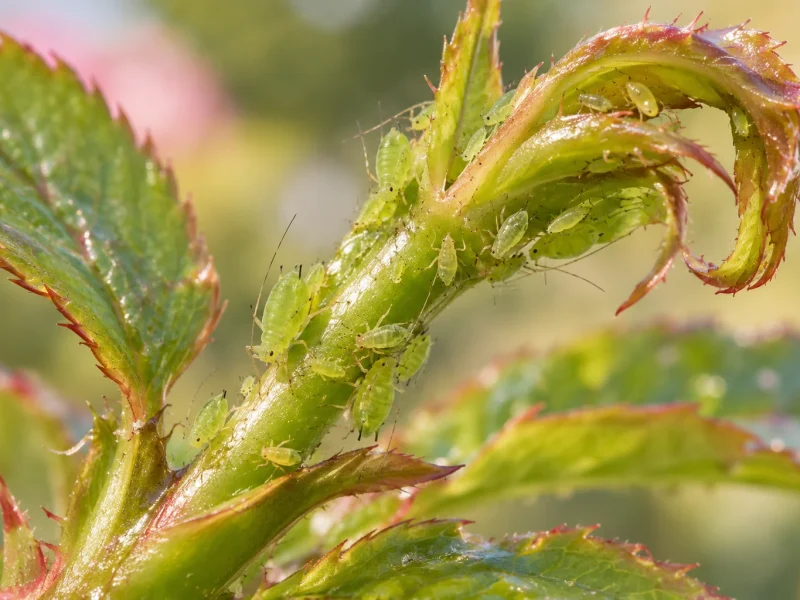
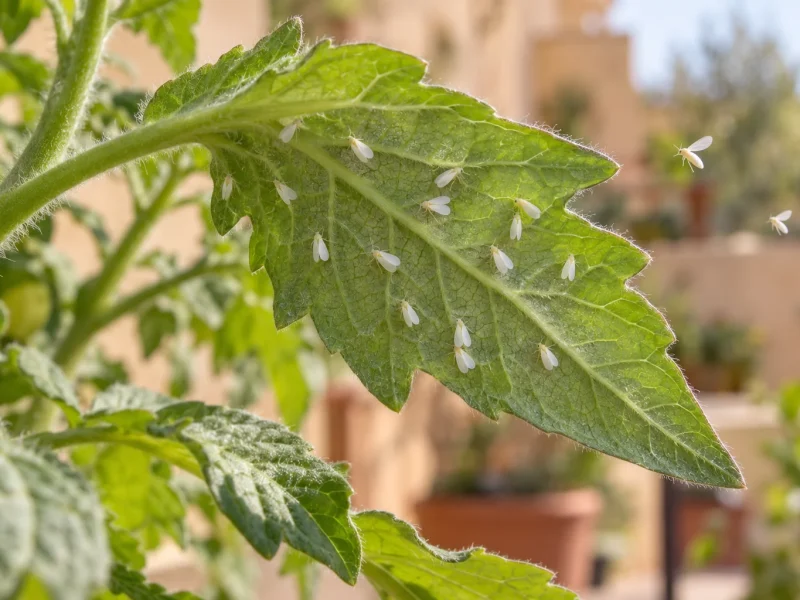
- Prevention: as you clean, you remove the first insects and look at every leaf up close. That’s often how a mealybug or spider mite is spotted early.
The method, step by step
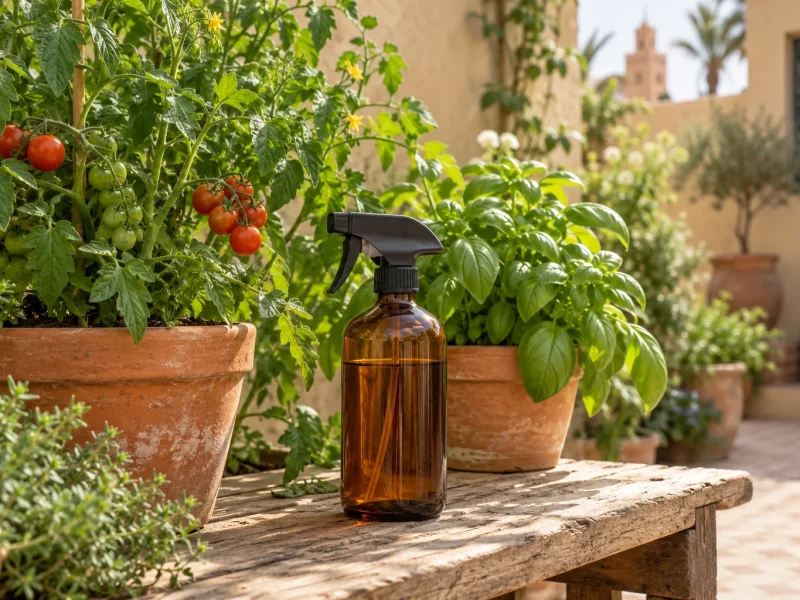
- Shake the bottle of ready-to-use black soap for plants.
- Spray the leaf, top and underside.
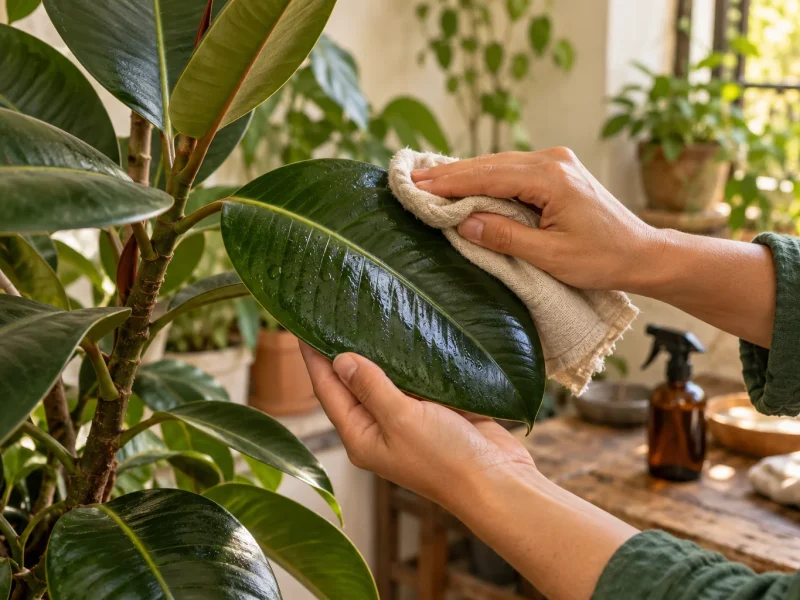
- Wipe with cleaning gloves or a soft cloth, supporting the leaf with your other hand so it doesn’t break. From the centre to the tip.
- In the morning or late in the day, never in full sun.
- Afterwards, during the growing season, spray our seaweed foliar feed: it settles better on clean foliage.
For a small plant, a lukewarm shower also does the job, with the soil covered. For hairy leaves (African violets, some Begonias), no water: use a soft, dry brush.
What to avoid
- Leaf-shine sprays: they make leaves gleam, but leave a film that clogs the leaf’s pores.
- Oil, milk, beer: these tricks leave a greasy or sugary residue that attracts dust and encourages mould.
- Hammam soap or washing-up liquid: too concentrated or too scented for a leaf. See black soap: uses and precautions.
How often?
Usually once a month. More often near a window opening onto the street, when the chergui blows or in a dusty room. Large, smooth leaves (Monstera, Ficus, Strelitzia, Philodendron, Alocasia) benefit most.
A complete routine
The Plant Care Kit brings together the three steps of the monthly routine: clean with black soap, spray the foliar feed, and feed at the roots with compost tea during the growing season. Discover the Instant T range too.
Need an opinion?
Send a photo of your plant to our Plant Doctor: the whole plant, a close-up of a leaf (top and underside) and the surface of the soil. The diagnosis is free. You can also drop by the studio at 6 Rue Zemmour, Aviation district, Rabat.