Repotting is an everyday task that worries a lot of people. They’re afraid of damaging the roots, choosing the wrong pot, doing more harm than good. These fears aren’t unfounded: repotting at the wrong time or into the wrong pot weakens a plant. Done well, it gives it a new lease of life for years. Here’s everything you need to know, in the order you’ll need it.
Guide written by the Instant T studio in Rabat, updated in October 2026.
At a glance
Repot in spring or early summer, every one to three years, into a pot 2 to 4 cm wider than the old one, with drainage holes, using an airy potting mix suited to the plant (never garden soil). Keep the base of the stem at the same height, water just once afterwards, and don’t add fertiliser for four to six weeks.
- Sign no. 1: roots coming out of the drainage holes or circling the root ball.
- Don’t: put pebbles or gravel at the bottom of the pot. It doesn’t drain — we explain why here.
- Only in an emergency (rotten roots, pests in the potting mix, a broken pot): repot out of season.
Contents
- How do you know it’s time to repot?
- When should you repot a houseplant?
- What size pot should you choose?
- Which potting mix for repotting?
- Repotting step by step
- And after repotting?
- The myth of the pebble layer at the bottom of the pot
- A few special cases
- Mistakes to avoid
- Frequently asked questions
- Also worth reading
How do you know it’s time to repot?
A plant needs repotting when its roots have run out of room or its potting mix is exhausted. The most reliable signs:
- Roots coming out of the drainage holes or appearing on the surface of the potting mix.
- Water runs straight through the pot without soaking the mix, or on the contrary sits on the surface: the mix has compacted and sometimes gone hard.
- The plant has stopped growing during the growing season, despite good light and proper watering.
- The potting mix is pulling away from the sides of the pot, or the pot is warping or cracking.
- The plant, too tall or too heavy, keeps toppling over.
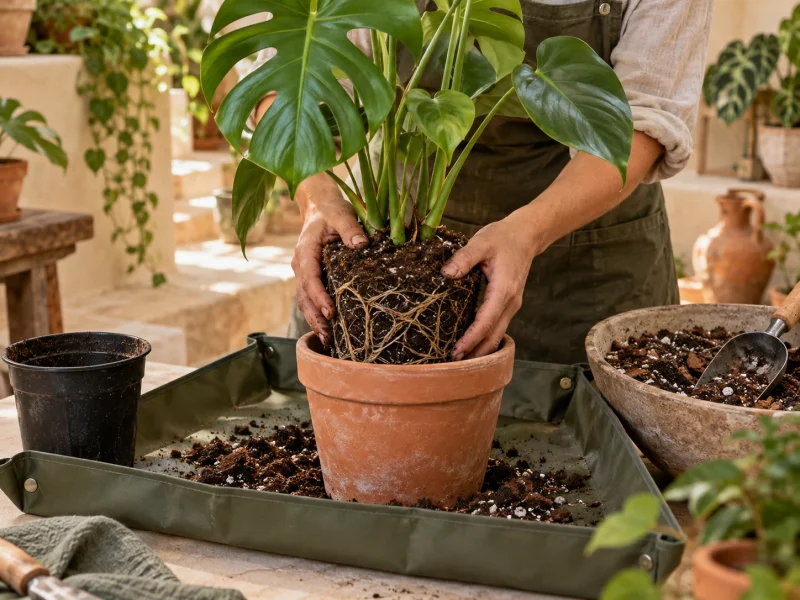
The surest test is still easing it out: gently slide the root ball out of the pot. If the roots form a dense mat circling the root ball, it’s time. If the root ball falls apart and you see few roots, you’ve repotted too early or the problem lies elsewhere.
What isn’t necessarily a sign
A plant that’s yellowing or dropping leaves isn’t always asking to be repotted. The most common causes are poorly adjusted watering or a lack of light: first check your watering rhythm and the light in its spot. Repotting a plant that’s already stressed only adds more stress.
Some plants like to be snug
Spathiphyllum, Sansevieria, Chlorophytum and Hoya cope well with tight roots, and some even flower better that way. For these plants, repotting every two or three years, or even less often, is enough.
When should you repot a houseplant?
In spring or early summer, when the plant starts growing again. It’s then in full swing: it puts out new roots and recovers quickly from the shock. In Rabat, in practice, that means the period from March to early June, as soon as the days lengthen and new shoots appear.
Avoid autumn and winter, when the plant is running slow: it recovers poorly, and fresh potting mix stays wet for too long. What to do in that season is described in our autumn and winter guide. Also avoid summer heatwaves and plants in full flower.
| Situation | When to repot |
|---|---|
| Tight roots, healthy plant | In spring (March to early June) |
| Newly bought plant | After two to four weeks of acclimatisation, in spring if possible |
| Rotten roots, pests in the potting mix | Straight away, whatever the season |
| Broken pot or unstable plant | Straight away |
| Plant in flower | After flowering |
| Plant in winter, no emergency | Wait for spring; you can refresh the top of the potting mix (see below) |
What size pot should you choose?
A pot 2 to 4 cm wider than the old one, as a general rule. For a large, fast-growing plant (a Monstera or a Ficus lyrata, for example), you can go up to 5 cm, but no more.
The reason is simple: an oversized pot holds a lot of potting mix that the roots don’t use. That mix stays wet for a long time, the roots sit in water and rot. Moving from a 10 cm pot to a 25 cm pot “so it has room” is one of the most common mistakes.
| Current pot (diameter) | New pot | New pot volume (approximate) | Potting mix needed |
|---|---|---|---|
| 10 to 12 cm | 13 to 15 cm | about 1 to 1.5 litres | 0.5 to 0.75 litre |
| 13 to 14 cm | 16 to 17 cm | about 2 litres | 1 litre |
| 16 to 18 cm | 19 to 21 cm | about 3 to 4 litres | 2 litres |
| 20 to 22 cm | 23 to 25 cm | about 6 to 8 litres | 3 to 4 litres |
These volumes are guidelines: the shape of the pot changes them. As a rule, plan to replace about half the volume of the new pot, with the rest taken up by the root ball.
The pot must have drainage holes
A pot without a drainage hole is one of the most common causes of root rot. If you love a decorative container with no hole, use it as a cover pot: the plant stays in its nursery pot with holes, which you lift out to water. Our faux leather and jute planter, for example, is designed purely as a cover pot, with no drainage hole. Pots without holes and saucers are covered in our drainage guide.
Terracotta, plastic or ceramic?
| Material | Advantages | Limitations | Best for |
|---|---|---|---|
| Terracotta | Lets the potting mix breathe, dries faster, steadies large plants | Heavy, absorbs water, dries quickly in summer | Cacti, succulents, plants sensitive to overwatering |
| Plastic | Light, keeps moisture longer | Less breathable, risk of overwatering if you water too much | Plants that like to stay moist (Calathea, ferns), less frequent watering |
| Glazed ceramic | Decorative, holds water | Not very breathable, sometimes no hole | Common houseplants, if the pot has a hole |
This choice changes your watering rhythm: a plant in terracotta dries out faster than one in plastic. Our handmade planters come in three diameters (13, 16 and 22 cm): the product page for each size explains how they work.
Which potting mix for repotting?
The potting mix should match the plant, not the latest trend. It must hold enough water for the roots to drink and let in enough air for them to breathe. To understand what each ingredient does, read our guide to soil improvers. For an overview, see the complete guide to potting mixes and choosing a potting mix by plant family.
| Type of plant | Examples | Starting point |
|---|---|---|
| Tropical foliage plants | Monstera, Philodendron, Pothos, Syngonium, Ficus | Potting soil or compost, coco chips or bark, perlite |
| Plants that like to stay moist | Calathea, Maranta, ferns, Spathiphyllum | Rich base, vermiculite or coco, perlite |
| Alocasia and demanding tropical plants | Alocasia, Anthurium | Signature Potting Mix, designed for these demanding plants |
| Cacti and succulents | Echeveria, Haworthia, desert cacti | Cactus and succulent mix, or a blend of about two thirds mineral (pozzolana, perlite) to one third potting soil |
| Orchids, epiphytes | Phalaenopsis, some climbing Philodendrons | Bark, with a few coco chips |
If you’d rather not mix anything yourself, the Home Potting Mix Kit brings together perlite, vermiculite, coco chips and pozzolana. Note: these ingredients are added to potting soil or compost; they don’t feed the plant on their own. To choose between an all-purpose compost and a mix designed for tropical plants, see all-purpose compost or Signature Potting Mix.
Absolutely avoid garden soil. Too heavy, it compacts in a pot, suffocates the roots and may contain seeds and pests.
Repotting step by step
- Water the plant a day or two beforehand. A slightly moist root ball slides out more easily and stresses the roots less. Neither soaked nor dry.
- Prepare your workspace. A repotting mat limits the mess on the table or balcony, and a few mini tools make the job more precise. Lightly moisten the fresh potting mix.
- Ease it out. Lay the pot on its side, tap the sides, then gently pull from the base of the plant — never by the stems.
- Look at the roots. White or beige and firm, they’re healthy. Brown, soft or foul-smelling, they’re rotten: cut them off with a clean tool.
- Untangle the ones going round in circles. With your fingertips, loosen the mat of roots to encourage them to explore the fresh mix.
- Cover the hole with a piece of mesh or a crock if the mix might escape. That’s all: no layer of pebbles or gravel.
- Put a little potting mix in the bottom, centre the plant, and keep the crown (where stems meet roots) at the same height as before.
- Fill in around the root ball, tapping the pot to get rid of air pockets, without pressing down hard.
- Water once, gently, until water runs out, then empty the saucer.
- Let the plant recover: bright indirect light, no direct sun for one to two weeks, no fertiliser.
Should you cut the roots?
Only those that are dead or rotten. On a healthy plant with tight roots, untangle them or score them lightly rather than cutting them. If you have to remove a lot, choose a smaller pot so the mix dries quickly, and trim the foliage a little to rebalance the plant.
And after repotting?
- Watering: just one watering at planting time. After that, wait until the top few centimetres of mix are dry, checking with your finger. Fresh, airier potting mix sometimes dries faster than the old one: touch it, don’t follow a schedule.
- Light: bright and indirect. No direct sun for one to two weeks.
- Fertiliser: none for four to six weeks. Fresh potting mix already contains nutrients, and injured roots don’t cope well with salts. After that, a light feed during the growing season, from spring to late summer: see our fertiliser guide.
- A little drooping: slight drooping in the days that follow is common. The plant recovers within two to six weeks. If many leaves turn yellow, the potting mix is probably too wet.
- Water: if your tap water is hard, as in most Moroccan cities, read what limescale does to your plants.
The myth of the pebble layer at the bottom of the pot
Many people put a layer of clay pebbles, gravel or broken crocks at the bottom of the pot “to improve drainage”. It doesn’t work. When water meets a layer of coarse material beneath a finer mix, it builds up above that layer before passing through. There’s always a saturated zone at the bottom of a pot, but the pebble layer raises it by its full thickness: it brings the water closer to the roots instead of further away. This has been documented notably by horticulturist Linda Chalker-Scott of Washington State University.
What really drains: an airy potting mix through the full height of the pot, and drainage holes. Clay pebbles are still useful mixed into the potting mix, as a top layer, or in a self-watering system. It’s all explained in our article on drainage.
A few special cases
- A large plant in a large pot: rather than repotting, top-dress. Remove the top three to five centimetres of potting mix and replace them with fresh mix. This renews some of the nutrients without disturbing the roots.
- Cacti and succulents: repot them dry, wearing gloves, in a mineral mix, and wait a few days before the first watering. It’s all in our guide to cactus potting mix. The Cactus and Succulent Kit brings together the mix and pozzolana.
- Calathea, Maranta: plants sensitive to sudden change and to limescale. Repot them carefully in a light, moist mix and, if possible, water them with rainwater, filtered water or soft water.
- A newly bought plant: give it two to four weeks to acclimatise, unless the pot is unstable or the potting mix is visibly waterlogged or infested.
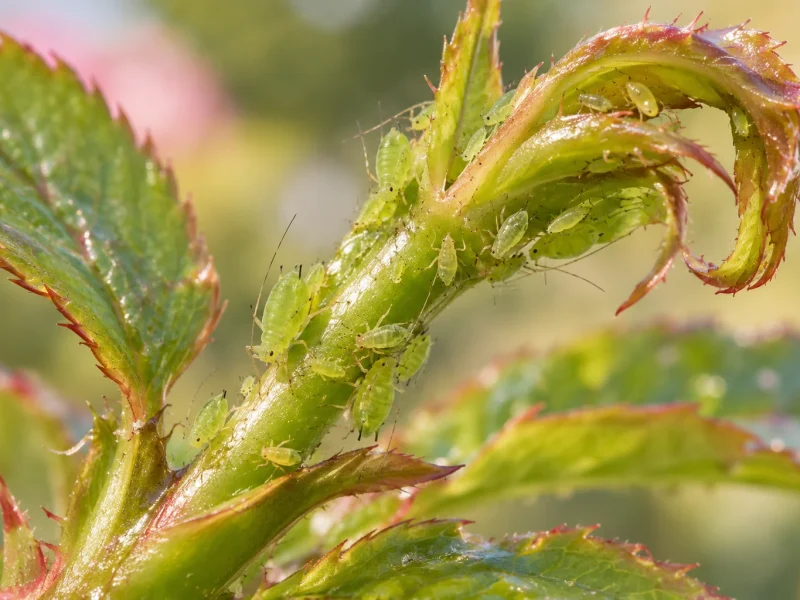
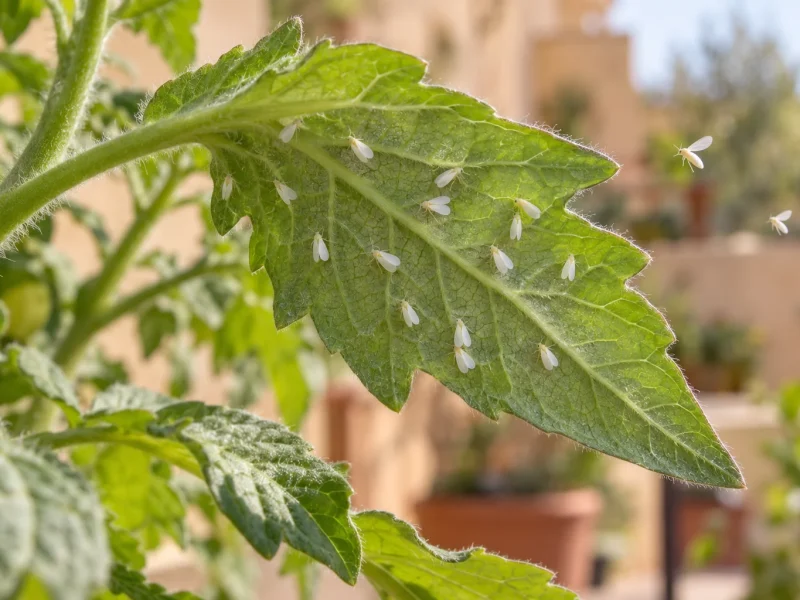
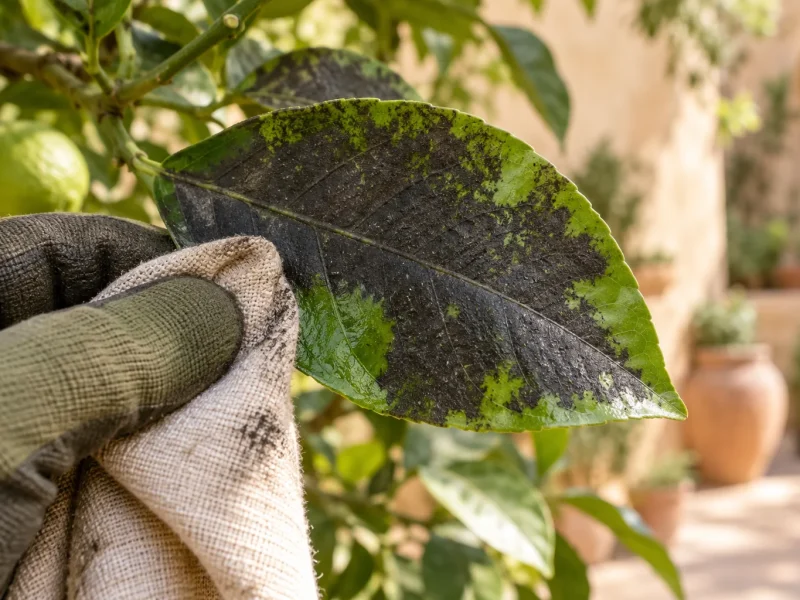
- A sick plant: if the potting mix smells bad or pests are hiding in it, repot without delay, remove as much of the old mix as possible and throw it away. For pests, see black soap and its limits.
Mistakes to avoid
- Choosing a far-too-big pot “so it has room”.
- Using a pot without a hole as a growing pot.
- Using garden soil.
- Pressing the potting mix down hard.
- Putting pebbles or gravel at the bottom.
- Burying the crown, or leaving it too high.
- Watering heavily several days in a row after repotting.
- Repotting a plant in flower or in the depths of winter.
- Feeding straight away.
Frequently asked questions
Can I repot a plant in summer?
You can if necessary, but it’s not the best time. Heatwaves already tire the plant. If you have to, choose a cool day, work in the shade and keep the plant out of direct sun afterwards.
Should I repot a plant as soon as I buy it?
Not immediately. Give it two to four weeks to adjust to its new light. Repot straight away only if the pot is unstable, the potting mix is waterlogged or you can see pests.
How long does a plant take to recover from repotting?
Usually two to six weeks. It may seem to stall: that’s normal — it’s re-establishing its roots before growing again.
Which pot should I choose for repotting?
A pot 2 to 4 cm wider than the old one, with drainage holes. Terracotta dries faster; plastic keeps moisture longer.
Should I put clay pebbles at the bottom of the pot?
No. A layer of pebbles won’t drain any better: it raises the saturated zone closer to the roots. Mix perlite, coco chips or pozzolana into the potting mix instead.
Can I repot a plant that’s in flower?
It’s better to wait until flowering is over: the plant is already using a lot of energy, and repotting stresses it.
When should you definitely not repot?
In the depths of winter when there’s no emergency, during a heatwave, or when the plant is already badly weakened by too much or too little water. Fix the cause first, then repot.
How much potting mix will I need?
About half the volume of the new pot. For a new 16 cm pot, allow one litre; for a 25 cm pot, three to four litres. Our potting mixes come in 1, 2 and 5-litre sizes (2 and 5 litres for Signature Potting Mix and the cactus mix).
Also worth reading
- The complete guide to houseplant potting mixes
- Drainage: clay pebbles, pots without holes, saucers
- Which potting mix for which plant?
- When should you water your plants? Forget the calendar, touch the soil
- Compost: why it should replace peat
Not sure about the pot or the mix? Message us on WhatsApp at 06 61 05 26 38. The studio is at 6 Rue Zemmour, Aviation district, Rabat, Monday to Saturday, 11am to 3pm. The Gardening & Plants Morning (150 MAD) also has a “Plant Doctor” corner.